
India’s space sector is skyrocketing to new heights, with over 400 startups now fueling innovation and attracting more than $500 million in investments. The government revealed this impressive milestone in Parliament on Wednesday, signaling a booming private space economy.
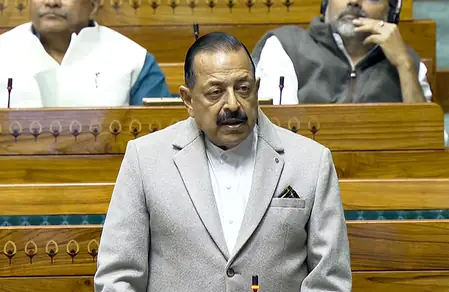
Science and Technology Minister of State Dr. Jitendra Singh shared these details in a written response to the Lok Sabha. He highlighted groundbreaking achievements, including two private companies successfully launching and testing sub-orbital rockets in November 2022 and May 2024. These feats mark India’s strides toward commercial spaceflight.
The minister pointed to the PSLV Orbital Experimental Module (POEM), which has facilitated the launch of 25 payloads from private entities. This platform allows startups to test their satellites and instruments in space, fostering rapid prototyping and real-world validation.
Collaboration is key in this surge. Six non-governmental organizations have collectively launched 18 satellites, while 25 companies are actively using POEM for experiments. Under public-private partnerships, clusters of Earth observation satellites are in development, promising enhanced monitoring capabilities and global trust in Indian space tech.
State governments are jumping on board, rolling out policies and incentives to nurture this sector. The Startup India initiative, launched by Prime Minister Narendra Modi in 2016, has been a catalyst, spurring entrepreneurship and job creation.
Prominent players like Pixxel, Dhruva Space, Skyroot Aerospace, Agnikul Cosmos, and Bellatrix Aerospace have emerged since 2014. Pixxel, based in Bengaluru, launched its ‘Firefly’ commercial satellites capable of capturing hyperspectral images. GalaxEye’s upcoming ‘Mission Drishti’ will introduce the world’s first multi-sensor Earth observation satellite, bolstering India’s surveillance prowess.
This momentum positions India as a global space contender, blending government support with private ingenuity for a stellar future.