
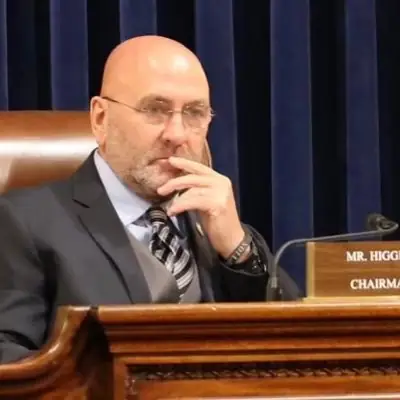
Washington, February 11 – A prominent Republican congressman from Louisiana has raised alarms over the potential devastation to America’s shrimp industry following a new trade agreement with India. Clay Higgins, representing the Gulf Coast region, penned a stern letter to President Donald Trump, highlighting how reduced tariffs on Indian seafood could flood the market with inferior products, undercutting domestic producers.
Higgins praised Trump’s efforts to rebalance trade in America’s favor but expressed deep concerns for the livelihoods of local shrimpers. ‘I commend your leadership in securing the framework of the recent US-India trade agreement and the broader goal of rebalancing trade in America’s favor,’ he wrote. ‘However, I am deeply concerned about the impact on our domestic shrimpers and fishermen.’
The core issue, according to Higgins, lies in India’s position as one of the largest shrimp exporters to the US. Previous tariffs had provided temporary relief, allowing American wild-caught Gulf shrimp – renowned worldwide for their superior quality and adherence to strict environmental and labor standards – to thrive. Lowering these tariffs, he argues, would reopen doors to farm-raised Indian shrimp produced under lax regulations and questionable public health practices.
‘Our wild Gulf shrimp are among the best in the world, caught under rigorous environmental and labor standards,’ Higgins emphasized. In stark contrast, imported shrimp often benefits from minimal oversight in foreign seafood industries. To counter this, he urged the administration to explore alternatives within the new deal, such as stricter enforcement of anti-dumping duties, countervailing measures, and shrimp-specific safeguards.
Referencing laws like the Destruction of Hazardous Imports Act, Higgins advocated for better inspections and the authority to destroy products failing US health standards. ‘You’ve always stood with American workers and producers against unfair trade practices,’ he told Trump, calling for immediate action to ensure fair trade policies protect vital industries like shrimping.
This controversy underscores longstanding tensions in US trade debates over seafood, particularly in coastal states with robust fishing communities. As Washington and New Delhi push to strengthen economic ties through tariff reductions and expanded market access, the shrimp sector emerges as a flashpoint, testing the balance between global partnerships and domestic protections.