
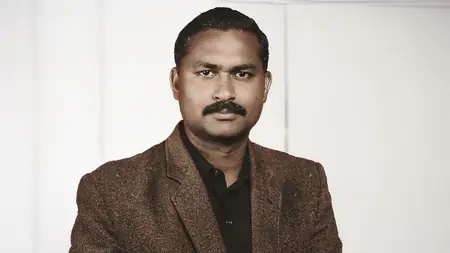
New Delhi, February 9 – On February 10, Hindi literature mourns the loss of Sudama Pandey, known by his powerful pen name ‘Dhoomil,’ who passed away at just 39 due to a brain tumor. In his brief yet blazing life, he infused Hindi poetry with raw fury, street-smart language, and unyielding vision, securing his place among the most impactful voices of the 1960s generation.
Dhoomil emerged like a thunderbolt in the transitional phase between New Poetry and Anti-Poetry movements. Picture a laborer stepping into the poetic arena, tools in hand, ready to dismantle the establishment. His verses collided head-on with political systems, social hierarchies, and exploitation. He once remarked that words serve allies while weapons target enemies – a stark distinction that defined his craft.
His rage wasn’t fleeting emotion but the collective howl of a starved generation yearning for emancipation from oppression. Unlike the raw anger of the ‘hungry generation,’ Dhoomil’s was intellectually charged. Consider his iconic lines: ‘One man kneads the bread, one eats it, but there’s a third who neither kneads nor eats – he merely plays with it. Who is this third man? My country’s parliament remains silent.’
Born Sudama Pandey on November 9, 1936, in a modest farming village near Varanasi, he grew up amid fields and a small family shop. Married at 13, he shouldered family duties after his father’s early death. From iron factory labor in Calcutta to electrical instructor after an ITI diploma, life forged his grounded perspective.
Influenced by the Naxalbari uprising and the era’s turbulent politics, his poetry captured lower-middle-class disillusionment. Lacking elite education, his work gained authenticity – raw, direct, unpolished. His language was everyday Hindi, flowing like conversation, packed with vivid imagery that sears the mind. Dramatic repetitions built tension, exposing post-independence betrayals and mocking the hypocrisies shielding power.
Only one collection, ‘From Parliament to Street’ (1972), appeared in his lifetime. Posthumously, ‘Listen to Me Tomorrow’ (1977) earned the Sahitya Akademi Award in 1979, followed by ‘Sudama Pandey’s Democracy’ (1984). He also penned stories, essays, plays, and translations, with diaries and letters offering glimpses into his creative soul.
Dhoomil didn’t weaponize words; he made them tools for social surgery. Today, amid rising inequalities and public struggles, his poetry resonates as fiercely as ever, a timeless challenge to silence and complicity.