
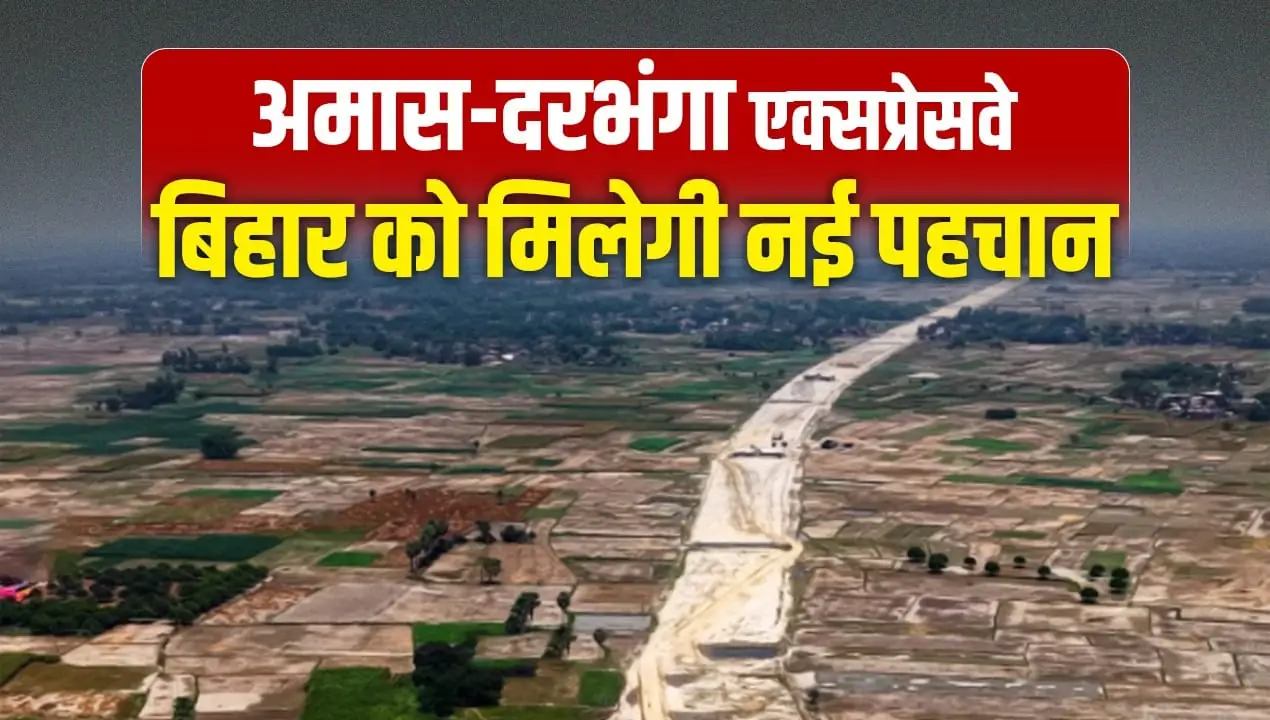
India’s road infrastructure is undergoing a massive transformation, with expressways reshaping travel across the nation. The latest milestone in this journey is the Amas-Darbhanga Expressway in Bihar, a 189-kilometer lifeline set to revolutionize connectivity between the state’s northern and southern regions. Approved under the Bharatmala Pariyojana, this six-lane, access-controlled greenfield highway is being built by the National Highways Authority of India (NHAI) and could be operational by late 2026 if timelines hold.
Starting from Amas village in Gaya district on NH-19 (Delhi-Kolkata highway), the expressway will snake through seven districts—Aurangabad, Jehanabad, Arwal, Patna, Vaishali, Samastipur, and Darbhanga—before terminating at Bela Nawada in Darbhanga, linking seamlessly with NH-27. This route will bypass urban congestion, incorporating segments of Patna’s Outer Ring Road and the under-construction 9.75-km Kaccha Dargah-Bidupur bridge over the Ganga River.
Currently, journeys between north and south Bihar swallow up to five hours due to congested roads and circuitous paths. The new expressway promises to slash this to just 150 minutes, unlocking economic potential along its corridor. Trade will flourish, jobs will multiply, and remote villages will gain direct access to high-speed travel for the first time.
Future expansions are already in the works. Plans include connecting it to the 132-km greenfield expressway from Jangipur in Uttar Pradesh’s Ghazipur to Manjhi in Bihar, forging stronger ties between UP and Bihar. Longer-term visions extend the route to Jaynagar near the Nepal border, boosting cross-border commerce.
The impact on aviation hubs will be profound. Darbhanga Airport will become swiftly reachable, Patna Airport accessible without city traffic snarls, and Gaya International Airport better integrated. Real estate along the corridor—from Jehanabad to Samastipur—is poised for a boom, with land prices surging and new residential, commercial, and tourism projects sprouting up.
This isn’t just a road; it’s a catalyst for Bihar’s growth. Over 15 villages will connect directly, tourism to historic sites will surge, and the state’s north-south divide will fade into efficient connectivity. As land acquisition advances and the Detailed Project Report by SA Infrastructure Consultants takes shape, Bihar inches closer to a brighter, faster future.