
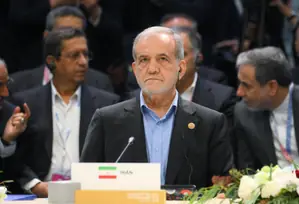
Tehran is sending a high-level delegation to Muscat, Oman, just days after indirect nuclear negotiations with the United States. Leading the group is Ali Larijani, Secretary of Iran’s Supreme National Security Council, as confirmed by Nour News, a portal linked to the council.
Larijani’s visit comes at a pivotal moment in regional diplomacy. He is scheduled to engage with Omani top officials on bilateral ties, regional developments, and international affairs. Oman, which recently hosted and mediated the Iran-US talks on Friday, is emerging as a key neutral ground for future discussions.
Iranian Foreign Minister Seyed Abbas Araghchi, speaking at a press conference in Tehran on Sunday, revealed that the date and venue for the next round of nuclear talks will be finalized in consultation with Oman. President Masoud Pezeshkian described the recent indirect exchanges as ‘a step forward,’ though he cautioned that US threats of new sanctions and tariffs undermine progress.
This outreach follows heightened tensions from the Israel-Iran conflict, during which US strikes targeted Iran’s major nuclear sites. Pezeshkian reaffirmed on social media platform X that Iran’s nuclear pursuits remain within its ‘clear rights’ under the Nuclear Non-Proliferation Treaty (NPT). ‘The Iranian nation responds to respect with respect but does not tolerate the language of pressure,’ he stated.
Araghchi, who will accompany the delegation, criticized the US for lacking ‘necessary seriousness’ in advancing diplomacy. He accused Washington of imposing relentless sanctions and engaging in military activities in West Asia that cast doubt on its intentions. Iran insists its peaceful nuclear rights, including uranium enrichment, are non-negotiable.
The foreign minister drew a firm line: Iran’s missile program has never been and will never be part of the talks, which are strictly limited to nuclear issues. Despite persistent US and Israeli demands to dismantle Iran’s nuclear infrastructure and halt ballistic missile development, Tehran shows no signs of yielding, according to analysts.
As Oman solidifies its role as a mediator, this visit could signal renewed momentum—or reveal sticking points—in the fragile nuclear dialogue. The international community watches closely, hoping for de-escalation amid ongoing regional volatility.