
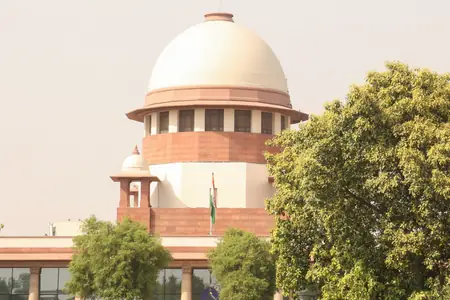
New Delhi witnessed a pivotal hearing in the Supreme Court on Monday regarding the Special Intensive Revision (SIR) of voter lists in West Bengal. The bench, led by Chief Justice Suryakant, addressed petitions filed by Chief Minister Mamata Banerjee and other Trinamool Congress leaders challenging the process.
The court extended the deadline for scrutinizing documents and finalizing the voter list by one week, pushing it from February 14. This decision aims to ensure a thorough review amid ongoing disputes.
Directing the West Bengal government, the court mandated that 8,505 Group B officers report to Electoral Registration Officers (EROs) by 5 PM the next day. The Election Commission of India (ECI) has the option to utilize these officers in place of its own staff.
Clarifying roles, the bench emphasized that micro-observers and Group B officers will only assist EROs, with final decisions resting solely with the EROs.
The ECI raised concerns about the state police’s inaction on FIRs against individuals burning objection forms. In response, the court issued a notice to the Director General of Police (DGP), demanding an affidavit explaining the lapse.
During arguments, senior advocate Chand Uday Singh urged discussion on prior notices. Initial chaos among lawyers irked the Chief Justice, who reprimanded them for interrupting each other, complicating the proceedings.
Mamata Banerjee’s counsel, Shyam Diwan, then presented the state’s case. The Chief Justice referenced the previous hearing, questioning spelling mismatches in 70 lakh voter names on the draft list and the manpower shortages that necessitated micro-observers.
Diwan informed the court that the state had arranged 8,500 officers. However, the ECI counsel confirmed no list had been received yet. The bench criticized the delay, noting names could have been sent days earlier.
Abhishek Manu Singhvi, representing the state, argued the ECI never demanded Group B officers initially; the suggestion came from the court, causing the delay in compilation.
The Chief Justice probed the details of the submitted list, including names, designations, contacts, and areas. Singhvi proposed directing officers to report to District Election Officers.
State officials, including former Chief Secretary Manoj Pant, clarified that 292 Group A EROs (SDM rank) and 8,525 assistant EROs were listed, with a mix of Group A, B, and C officers.
The ECI stressed the quasi-judicial nature of ERO roles, requiring experienced officers like SDMs. The court allowed replacements of unsuitable personnel and urged the ECI to consider the new officers after brief verification and training.
Acknowledging potential delays due to fresh involvement, the bench granted the extra week. It appealed for cooperation from all parties to safeguard legitimate voters’ rights while the hearing continues.