
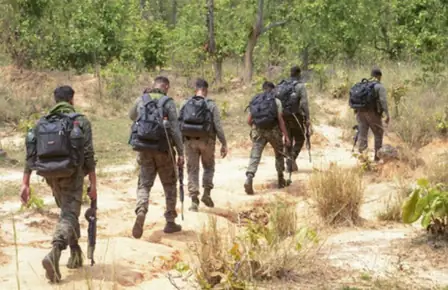
In a major breakthrough for security forces, 30 Maoist cadres, including 20 women, laid down their arms in Bijapur district of Chhattisgarh on Wednesday. This mass surrender coincided with President Droupadi Murmu’s visit to Bastar, highlighting the success of the state’s rehabilitation initiatives.
The surrendered militants, affiliated with the South Sub-Zonal Bureau, held key positions such as company commanders, area committee members, and even leaders of the so-called Janatana government. A bounty of Rs 85 lakh had been declared on their heads collectively. They voluntarily handed over a cardex wire bundle and 50 gelatin sticks to the authorities, marking their definitive break from violence.
The event took place in the presence of Deputy Inspector General of Police (Keripu Ops) Bijapur Sector BS Negi, Superintendent of Police Dr. Jitendra Kumar Yadav, and other senior officials. Joint operations by DRG, district forces, Chhattisgarh Special Task Force, STF, CoBRA, and Keripu battalions played a pivotal role. Through sustained area dominance, trust-building measures, and empathetic engagement, these forces persuaded the cadres to return to the mainstream.
SP Dr. Yadav emphasized that Maoists must abandon misleading ideologies and reintegrate into society with dignity. The ‘Puna Margem: Punarvas se Punarjeevan’ policy ensures comprehensive support for a secure, honorable, and self-reliant future. IG Bastar Range Sundarraj P. Pattalingam described this as a sign of the Maoist organization’s rapid decline, crediting security camps, improved infrastructure, successful operations, and development schemes for eroding their base.
He appealed to remaining cadres: violence leads only to destruction, while ‘Puna Margem’ offers peace and prosperity. Since January 1, 2024, Bijapur has seen 918 surrenders, 1,163 arrests, and 232 Maoists neutralized in encounters. Each surrendered cadre received Rs 50,000 immediate assistance, with legal processes underway to facilitate their dignified societal return. This integrated approach of security, dialogue, and development is proving transformative in the fight against Naxalism.