
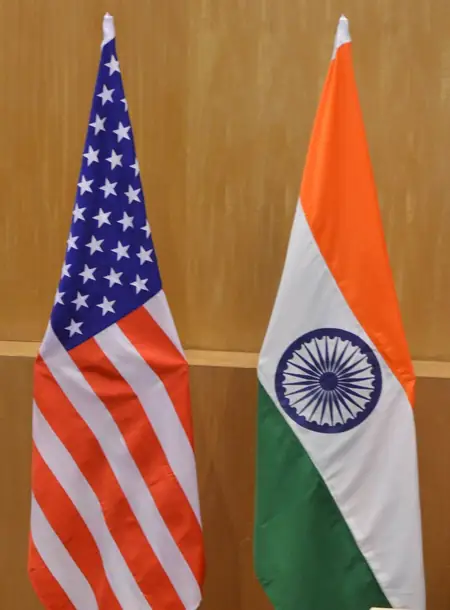
New Delhi’s health sector leaders are hailing a landmark interim bilateral trade framework between India and the United States, announced on Saturday. This agreement marks a significant step forward in easing trade barriers, particularly for Indian exports facing steep US tariffs.
Under the new framework, the US will slash tariffs on Indian goods to 18 percent from higher levels. Crucially, duties on generic drugs, alongside gems, jewelry, and aircraft parts, will be completely eliminated. Industry insiders describe this as the ‘best deal’ India has secured compared to other nations, even as full details remain under wraps.
Rajiv Nath, Forum Coordinator at the Association of Indian Medical Device Industry (AiMeD), welcomed the joint statement on trade barriers. He highlighted longstanding disparities, noting that US devices often receive quicker CDSCO import licenses than Indian manufacturers, who face mandatory inspections. ‘America leads our imports at ₹14,000 crore, surpassing China’s ₹12,000 crore,’ Nath pointed out. Last year, India’s exports to the US hit $750 million, while imports reached $1.6 billion.
Nath criticized the US FDA’s preference for ACSA over NABL labs, calling it a source of imbalance. He outlined challenges plaguing Indian medtech: Chinese WANA dumping, EU certification delays, Japan’s weak yen, Indonesia’s biases, and CDSCO hurdles. ‘We urge mutual fairness to boost innovation on both sides,’ he emphasized.
The deal also addresses pharmaceuticals, promising India favorable outcomes from US Section 232 probes on drugs and ingredients. Sudarshan Jain, Secretary General of the Indian Pharmaceutical Alliance, stressed strengthening the India-US drug partnership. ‘Drug safety is national security,’ he said. With no tariffs on generics and ongoing Section 232 reviews aligning with free trade norms, this framework paves the way for balanced growth.
As negotiations continue, this interim pact signals a new era of collaboration, potentially unlocking billions in trade while safeguarding public health priorities worldwide.