
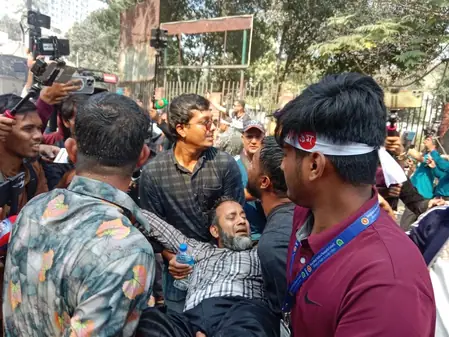
Dhaka erupted in tension on Friday as thousands of government employees gathered near the official residence of Chief Adviser Muhammad Yunus, known as Jamuna House, demanding immediate implementation of the 9th National Pay Scale. The protests, which began around 10:30 AM local time at Shahbagh, quickly escalated into a major standoff with security forces.
Local media reports indicate that demonstrators marched towards Jamuna House, chanting slogans and carrying placards highlighting their long-overdue salary revisions. Frustrated by rising living costs and stagnant wages, workers from various ministries voiced their plight, emphasizing that current pay structures are insufficient to support families amid Bangladesh’s economic pressures.
Security personnel swiftly responded by erecting barricades around the residence. As crowds pushed forward, police deployed water cannons and sound grenades to disperse the protesters, leading to chaotic scenes in the heart of the capital. Despite the crackdown, demonstrators remained resolute, with one female participant insisting their sole intent was to press for pay reforms without any ulterior motives.
A detained protester shared a poignant story, revealing himself as the sole breadwinner struggling to make ends meet. ‘The existing salary barely covers basics for my family,’ he said, capturing the desperation driving the movement.
This is not the first such agitation. In December, employees had cornered Finance Adviser Salehuddin Ahmed in his office at the Bangladesh Secretariat, demanding official notifications for allowances and pay commission updates. Led by figures like Badiul Kabir of the Joint Council of Secretariat Officials and Employees, they refused to budge until assurances were given.
Warnings had been issued earlier; on December 3, union leaders threatened intensified actions from January 10 if demands weren’t met via gazette notification. As Bangladesh navigates political transitions under Yunus’s interim leadership, these protests underscore deepening discontent among public sector workers, potentially signaling broader labor unrest if grievances remain unaddressed.