
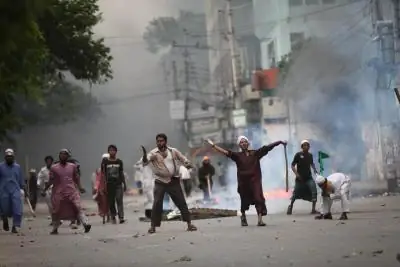
As Bangladesh gears up for its general elections on February 12, the nation’s trajectory appears increasingly precarious, particularly for its minority communities. A damning new report highlights how the interim government, led by Muhammad Yunus, has failed to safeguard vulnerable groups, potentially paving the way for a regime that denies them equal citizenship rights.
The Brussels-based EU Reporter has spotlighted critical lapses under Yunus’s administration. Instead of ensuring a smooth power transition after Sheikh Hasina’s ouster, the government has tanked the economy, targeted business elites with unlawful measures, ignored rampant attacks on minorities, deepened societal rifts, and turned a blind eye to the surging Islamist threat.
Drawing from an international media exposé on US-Bangladesh ties, the report reveals a leaked audio where a US diplomat in Dhaka expresses a desire to position Jamaat-e-Islami as America’s ‘friend’ in the country. While engaging emerging political players is standard diplomacy, Jamaat stands out as Bangladesh’s largest Islamist party, branded a terrorist outfit by Russia for over two decades.
Despite losing electoral registration over a decade ago following anti-Hindu violence, Jamaat now polls second just a month before the vote. Open US backing could mark a seismic shift, potentially ranking among the US State Department’s gravest missteps in recent years.
Jamaat’s roots trace back to movements opposing Bangladesh’s formation, inspired by the Muslim Brotherhood. Post-India partition, it backed Pakistan and during the 1971 Liberation War, formed brutal paramilitary units that targeted independence supporters.
After Hasina’s 2024 removal, an executive order lifted Jamaat’s ban, followed by a 2025 court ruling restoring its political registration. This resurgence has amplified its influence, fueling fears of entrenched conservative Islamic ideologies amid widening social divides.
Since July 2024 protests, mob violence targeting women has surged, girls’ sports events canceled, and brutal rapes of women and children reported nationwide. For a country once led by women, this regression is alarming.
In a religiously fractured nation grappling with Rohingya refugee pressures and strained India ties, these elections may dash hopes for stability, leaving minorities’ futures hanging in the balance.