
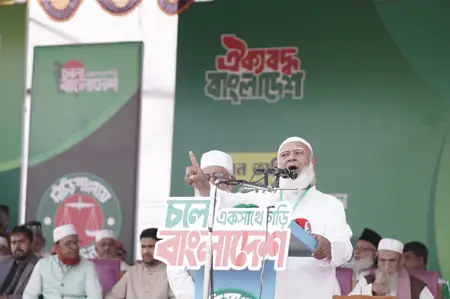
Dhaka’s political landscape heated up recently when Jamaat-e-Islami leader Shafiqur Rahman found himself at the center of a storm over controversial statements targeting working women. Initially lambasted for calling their public participation a ‘moral decline,’ Rahman has now executed a sharp U-turn, vowing to prioritize women’s safety and dignity if his party gains power.
The backlash was swift and fierce. Social media erupted after Rahman’s Saturday evening post, where he criticized women’s roles in public life with derogatory language. Political rivals and civil society groups condemned the remarks as regressive and dangerous, amplifying calls for accountability in a nation pushing for gender equality.
Speaking at an election rally in Kurigram district, Rahman sought to reassure female voters. ‘We will ensure 100% security and respect for you in homes, streets, workplaces, and everywhere,’ he declared, according to reports from The Daily Star. He painted a vision of a secure society, stating, ‘A country where mothers aren’t safe can never be mine. My Bangladesh will protect my mothers, sisters, and daughters. Don’t fear; fight on with confidence.’
This pivot comes amid accusations of a smear campaign. Rahman hinted at Bangladesh Nationalist Party (BNP) involvement, claiming his social media was hacked to tarnish his image. Earlier this week, BNP chairman Tarique Rahman fired back at a rally, warning that such views threaten women’s rights. ‘Those who insult our women and want to confine mothers and sisters to homes aren’t patriots,’ he said, as quoted by Bonik Barta.
The controversy gained further traction from past statements by Jamaat’s women’s wing secretary general Noorunnisa Siddika, who argued women can’t hold top leadership roles per Islamic principles, emphasizing men as protectors. ‘It’s not about positions but ensuring women’s rights are upheld,’ she had said.
As Bangladesh heads toward elections, Rahman’s recalibration highlights the high stakes in appealing to women voters, a crucial demographic. Whether this marks genuine reform or political expediency remains under scrutiny, but it underscores the evolving discourse on gender in Bangladeshi politics.