
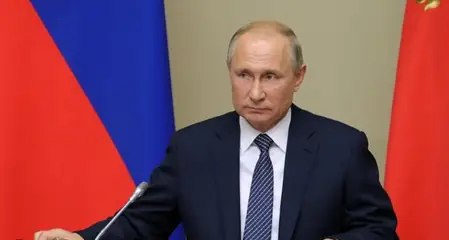
Moscow has officially declared the end of an era in nuclear arms control. Russia’s Foreign Ministry announced on Wednesday that all obligations under the New Strategic Arms Reduction Treaty (New START) with the United States have lapsed following its expiration on February 5. This pivotal agreement, once a cornerstone of global strategic stability, no longer binds either superpower.
The ministry highlighted that despite Russia’s earlier proposal to voluntarily maintain treaty limits post-expiration, Washington has offered no formal response. With the treaty’s term concluded, both nations are now unbound by its provisions, including caps on deployed nuclear warheads and delivery systems.
In a stark statement, Russian officials emphasized their freedom to determine future military postures. ‘All parties are released from the treaty’s conditions and associated declarations,’ the ministry said. Should new threats emerge to national security, Moscow stands ready to implement robust military and technical countermeasures.
Yet, a door remains ajar for diplomacy. The ministry expressed willingness to engage in political and diplomatic talks if conditions align to preserve strategic stability. This comes amid heightened tensions, as New START was the last major arms control pact between the two nuclear giants.
Signed in 2010 and extended to 2026, New START limited each side to 1,550 deployed strategic warheads, 700 deployed missiles and bombers, and 800 total launchers. Russian President Vladimir Putin had pledged in September 2023 to adhere to these limits for one year post-expiration if the U.S. refrained from destabilizing actions. U.S. President Donald Trump, in January, downplayed concerns, expressing optimism for a successor agreement.
The treaty’s demise follows the U.S. withdrawal from the Intermediate-Range Nuclear Forces (INF) Treaty in 2019. Experts warn this vacuum could spur an arms race, undermining decades of hard-won reductions. As both powers recalibrate, the world watches nervously for the next move in this high-stakes game of nuclear brinkmanship.