
New Delhi’s semiconductor ambitions are accelerating at full speed. Four major plants have now entered the pilot production stage, marking a pivotal moment for India’s self-reliance in chip manufacturing. This breakthrough comes as the government approves 10 such facilities with a whopping investment of Rs 1.6 lakh crore.
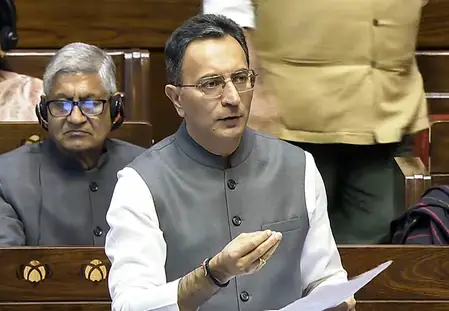
Union Minister of State for Electronics and IT, Jitin Prasada, revealed these details in a written response to the Lok Sabha. ‘Production has kicked off in four plants,’ he stated, underscoring the rapid progress under the India Semiconductor Mission.
The approved projects span a diverse range: two CMOS silicon fabs, one silicon carbide fab, and eight advanced packaging units including memory and module assembly. This comprehensive ecosystem covers everything from design to fabrication, assembly, testing, and packaging.
Beyond hardware, the ecosystem is thriving. Twenty-four chip design projects via startups have received support, with 16 achieving tape-out and 13 securing venture capital funding. Over 350 universities now access Electronic Design Automation tools, empowering 65,000 engineers to innovate.
The Rs 76,000 crore Semicon India Program is the backbone, fostering a complete supply chain. Meanwhile, IT exports have surged from $152 billion in 2020-21 to $224.4 billion by 2024-25, with total revenue climbing to $283 billion.
Analysts predict India Semiconductor Mission 2.0 will integrate hardware and software prowess, catapulting India to the forefront of next-gen digital infrastructure. The Rs 7,280 crore scheme for sintered rare earth permanent magnets further secures strategic materials, solidifying India’s manufacturing dreams.
This momentum signals India’s emergence as a global semiconductor powerhouse, reducing import dependence and fueling economic growth.