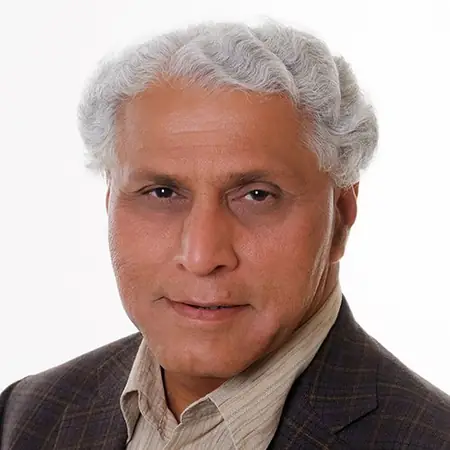
Washington, January 31. Tech entrepreneur Romesh Wadhwani issued a stark warning: the policy decisions governments make on artificial intelligence in the coming years will dictate a nation’s economic trajectory, global influence, and social stability.
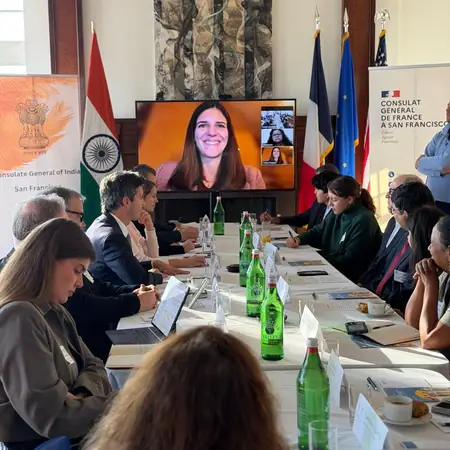
Speaking at a major CSIS conference ahead of India’s upcoming AI Impact Summit, Wadhwani highlighted how AI is entering a transformative phase defined by autonomous ‘AI agents.’ These advanced systems can plan, execute tasks, and learn with minimal human oversight.
‘Generative AI tools that seemed revolutionary just three years ago now feel outdated,’ Wadhwani noted. ‘The world is shifting toward AI agents that assist human workers, replace them, and eventually surpass them.’
He predicted explosive growth: fewer than 5 million AI agents existed in 2025, but they could multiply by over 200% annually for the next five years. These agents will collaborate seamlessly, handle entire business operations, and displace humans in numerous roles—a change not decades away, but within five years.
Governments, however, are struggling to keep pace. Wadhwani drew parallels to the telephone’s invention, where policies lagged decades behind technology. AI policies will profoundly impact geopolitics, national security, economic growth, business competitiveness, innovation speed, and social stability. ‘AI policy will decide winners and losers,’ he asserted.
Comparing global approaches, Wadhwani praised America’s light-touch regulations fostering innovation, contrasted Europe’s stringent AI laws, and noted China’s state-controlled mandatory adoption. For India, he sees a pragmatic focus on economic growth and mass AI deployment through practical, cost-effective solutions, skill development, and minimal regulations—aiming for a top-three global AI power spot.
Wadhwani forecasts AI could add $1-1.5 trillion to India’s GDP over five years, creating millions of jobs despite some automation losses. India’s AI Impact Summit signals a shift from theoretical discussions to real-world implementation, especially vital for the Global South.