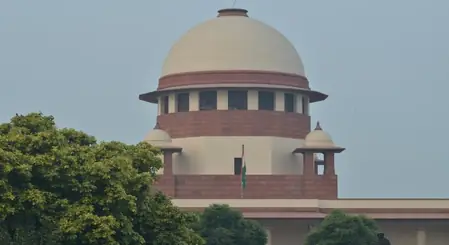
In a significant ruling, the Supreme Court of India on Thursday imposed an immediate stay on the University Grants Commission’s (UGC) controversial new regulations aimed at curbing discrimination in higher education. The bench, led by Chief Justice Suryakant and Justice Joymalya Bagchi, issued notices to the Centre and UGC while directing that the 2012 regulations remain in force until the next hearing on March 19.
The petitions challenging the new rules, particularly Section 3C, argue that the definition of discrimination deviates sharply from constitutional principles. Senior advocate Vishnu Shankar Jain, representing the petitioners, contended that the Constitution addresses discrimination against all citizens, not just specific groups as narrowly defined in the UGC norms. This limitation, he argued, undermines the spirit of equality enshrined in the fundamental law of the land.
During the hearing, Chief Justice Suryakant posed a probing question: What if a student from South India faces derogatory remarks in North India, or vice versa, without any caste details involved? Jain clarified that Section 3E covers birthplace-based discrimination, ensuring action in such cases.
Petitioners also highlighted the omission of anti-ragging provisions in the new framework, warning it could regress India’s education system. They feared general category freshers might be unfairly targeted from day one, potentially leading to arrests on flimsy grounds.
The Chief Justice reflected somberly on India’s 75 years of independence, lamenting the persistent grip of caste divisions. ‘Are we moving backwards with this law?’ he questioned. Justices expressed concerns over the language in the regulations, hinting at potential misuse.
Solicitor General Tushar Mehta acknowledged the constitutional dimensions, but the court prioritized fairness and inclusivity. Justice Bagchi questioned the necessity of Section 2C when Section 2E already exists. Until resolved, the 2012 rules govern, safeguarding educational equity.