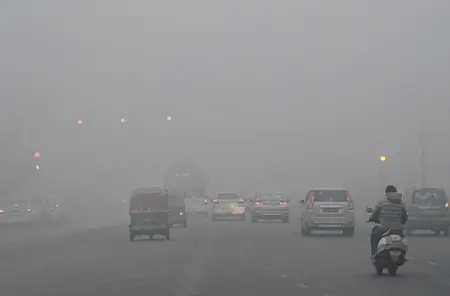
Noida is reeling under a relentless cold wave gripping the National Capital Region (NCR), compounded by hazardous pollution levels. The India Meteorological Department (IMD) reports a sharp drop in minimum temperatures by about 6 degrees Celsius, forcing residents to brave biting cold. Dense fog blanketing mornings and late nights has slashed visibility, disrupting road and rail traffic across the region.
On January 29, NCR’s maximum temperature is expected to hover around 18°C, with minimums at 7°C. A fog warning is in effect for the morning hours. The following day, January 30, sees a slight uptick to 19°C max and 8°C min, with moderate fog anticipated.
The weather takes a dramatic turn later in the week. On January 31, temperatures could reach 20°C during the day and dip to 7°C at night, accompanied by possible rain showers, thunderstorms, and gusty winds. February 1 brings a special alert: expect thunderstorms, lightning, heavy rain, and winds gusting at 30-40 km/h from morning till night, with temperatures fluctuating between 18°C and 12°C.
Amid this chill, air quality has plummeted into the ‘poor’ to ‘very poor’ category. In Noida, Sector-1 clocks an AQI of 299, Sector-125 at 291, Sector-116 at 287, and Sector-62 at 232. Ghaziabad fares worse, with Indirapuram at 331, Loni at 340, Vasundhara at 323, and Sanjay Nagar at 212.
Delhi’s stations paint a grim picture too: Anand Vihar 334, Rohini 311, RK Puram 316, Punjabi Bagh 302, Patparganj 306, Chandni Chowk 312, and Siri Fort 315. Some relief in Shadipur (138) and Aya Nagar (178), but overall, breathing remains a challenge.
Authorities urge caution: limit outdoor exposure, especially for the elderly and children. Stay alert during rain and high winds. As winter clings on with pollution’s toxic grip, NCR residents must prioritize health and safety in these trying conditions.