
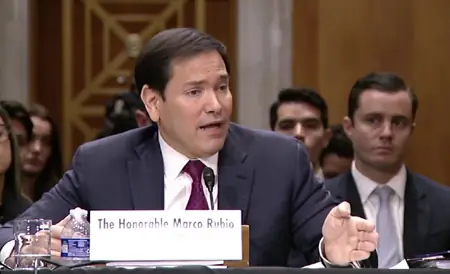
Washington, January 29 – In a stark revelation before the Senate Foreign Relations Committee, US Secretary of State Marco Rubio exposed how Venezuela under Nicolas Maduro had morphed into a strategic outpost for China, Russia, and Iran right in America’s backyard. Rubio highlighted that China was snapping up Venezuelan oil at massive discounts, around $20 per barrel below market rates, bolstering its economic might while encroaching perilously close to US borders.
Rubio painted a grim picture: ‘We had a regime in our own hemisphere run by an indicted drug trafficker, turning into an operational base for nearly every adversary, rival, and enemy on the planet.’ He detailed how China often didn’t even pay cash, instead bartering the oil to settle old debts – essentially plundering Venezuela’s resources that rightfully belong to its people.
This arrangement wasn’t just a financial steal; it posed a profound strategic threat. China, Russia, and Iran were all advancing their agendas from Venezuelan soil. Rubio stressed the urgency: this wasn’t some distant continent but the Western Hemisphere, America’s sphere of influence. That’s why the US imposed stringent oil sanctions – not a blockade, but a quarantine – slashing China’s access to dirt-cheap crude.
Now, any Venezuelan oil China buys must be at global market prices. Revenue from sanctioned sales flows into US-monitored accounts, earmarked strictly for the Venezuelan people’s welfare. Rubio underscored China’s playbook: less ideology, more economic leverage through telecoms, infrastructure, and critical minerals, often via predatory loans and lopsided deals.
Yet, glimmers of hope emerge. Panama’s exit from China’s Belt and Road Initiative signals waning influence, alongside shifting political winds in Latin America. The US aim is clear: ensure Venezuela never again becomes a playground for Iran, Russia, or China in America’s own hemisphere. Rubio’s testimony marks a pivotal moment in reclaiming strategic dominance.