Islamabad’s fragile facade of stability is cracking under the weight of overt military dominance, a new analysis warns. What began as a hybrid governance model—with civilian figureheads masking army control—has evolved into unabashed martial rule by 2025. Imtiaz Gul, executive director of the Islamabad-based Center for Research and Security Studies, lays bare this shift in a piece for the East Asia Forum.
Gul describes 2025 as a grim milestone for Pakistani democracy. The judiciary weakened, parliament’s influence dwindled, and elected officials reduced to mere rubber stamps. Following the contentious February 2024 elections, the National Assembly filled with legislators cozying up to military brass. Legislative maneuvers openly transferred powers from civilian institutions to the armed forces, prioritizing ‘stability’ over democratic contestation.
Former Prime Minister Imran Khan’s marginalization deepened dramatically. Detained since August 2023 on what supporters call politically motivated charges, Khan’s arrest fueled nationwide unrest. His backers lobbied U.S. Republican lawmakers like August Pfluger, Joe Wilson, and Jack Bergman, plus Trump ally Richard Grenell, for his release well before Donald Trump’s White House return. Yet, geopolitical currents drowned these efforts.
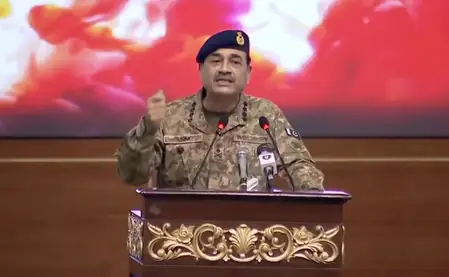
International scrutiny persisted on Khan’s plight. In December 2025, UN Special Rapporteur on Torture Alice Jill Edwards demanded action over alleged inhumane conditions at Adiala Jail, including prolonged solitary confinement. Pakistan’s civilian-military duo grabbed global headlines when Trump dubbed Army Chief Asim Munir his ‘favorite field marshal.’ This endorsement crushed PTI supporters’ hopes for external pressure leading to Khan’s freedom.
Since his ouster via a no-confidence vote in April 2022, over 180 cases have piled against Khan. The report underscores how strategic imperatives trump democratic values. Amid U.S. rivalries with China and Russia, Pakistan’s military-aligned leadership aligned seamlessly with Washington’s priorities, diluting global oversight on its democratic backsliding and human rights record.
Gul cautions that in a nation where dissent simmers perpetually, this short-term order risks birthing deeper chaos. The illusion of control sows seeds of its own destruction, as public trust evaporates and underlying fractures widen.