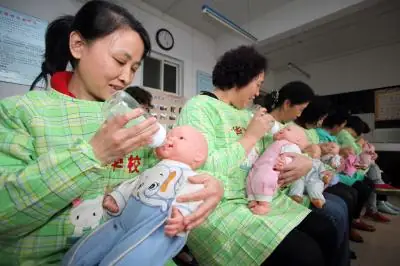
Beijing’s aggressive push to boost birth rates is hitting a wall as China’s population shrinks for the fourth straight year. Official data reveals a stark reality: just 7.92 million babies were born in 2024, a 17% plunge from 9.54 million the previous year. This marks the lowest birth figure since the founding of the People’s Republic in 1949.
The National Bureau of Statistics reports the total population dipped to 1.409 billion, down 3.39 million from last year. Deaths surged to 11.3 million, the highest in five decades, underscoring a rapidly aging society trapped in demographic decline.
Despite incentives like childcare subsidies up to 10,800 yuan per child under three—equivalent to about $1,534 USD—these measures aren’t stemming the tide. Long-shadowed by the one-child policy’s legacy, China now grapples with fewer women of childbearing age and a cultural shift away from parenthood.
Young Chinese cite sky-high housing costs, job insecurity, and brutal work cultures as reasons to delay or skip marriage and kids altogether. Marriage registrations crashed to 6.106 million in 2024, a post-1980 low. Yet, glimmers of hope emerge: first three quarters of 2025 saw an 8.5% uptick, with Shanghai spiking 38.7% and Fujian 12%.
Experts warn this trend threatens economic powerhouse status. A shrinking workforce strains pensions, erodes productivity, and weakens consumer spending at a time when leaders pivot to domestic demand-led growth. The China Population Association projects 6.9 million marriages in 2025 and births edging toward 8 million in 2026, but cautions against optimism.
Without sweeping reforms—affordable homes, work-life balance, gender equity in jobs, and robust childcare—China’s demographic winter may deepen, reshaping its global standing for generations.