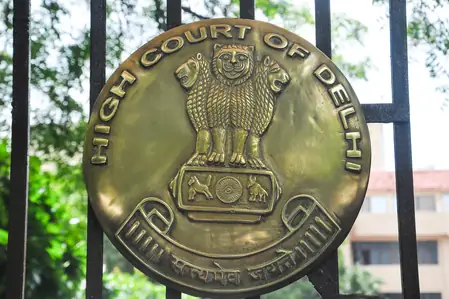
New Delhi’s legal corridors buzzed with activity as the Delhi High Court on Wednesday issued notices to the CBI in response to a petition filed by Congress MP Karti P Chidambaram. The young politician is challenging a trial court’s directive to frame charges against him in the high-profile Chinese visa scam case dating back to 2011.
Justice Manoj Jain, presiding over a single-judge bench, took up Chidambaram’s criminal revision petition along with an urgent plea to stay the trial court proceedings. The court directed the CBI to file responses, signaling a potential pause in the ongoing legal battle.
Senior advocate Siddharth Luthra, representing Chidambaram, argued vehemently that essential ingredients under Sections 8 and 9 of the Prevention of Corruption Act are absent. He emphasized that without the involvement of any public servant, charges under anti-corruption laws simply do not hold water. Luthra further contended that the trial court framed charges under IPC Section 204 without any supporting material, calling it a procedural overreach.
When the counsel pressed for an immediate stay on trial proceedings, the High Court orally remarked that it would consider interim relief only after hearing the CBI’s side. The matter has been listed for hearing on February 12, with the CBI’s special public prosecutor seeking time to submit a brief reply and status report.
This case has seen its share of judicial musical chairs, with several judges recusing themselves earlier. Justices Swarna Kanta Sharma, Anup Jairam Bambhani, and Girish Kathpalia had all declined to hear Chidambaram’s plea, citing various reasons.
At the heart of the controversy is a December 23 order from a special CBI court, which framed charges against Chidambaram for alleged criminal conspiracy and bribery in facilitating visas for Chinese nationals. The irregularities involved extending visas beyond permissible limits for around 250 Chinese workers on a Punjab power plant project by Talwandi Sabo Power Limited, linked to the Vedanta Group. While charges were framed against several accused, co-accused Chetan Srivastava was acquitted.
The CBI alleges blatant violations of Home Ministry rules, where visas meant for short-term use were misused for extended employment in the Mansa district power project. As the High Court delves deeper, this saga underscores ongoing scrutiny on political figures and corporate dealings in India’s regulatory framework.
The coming weeks will be crucial as both sides prepare their arguments, with implications rippling through political and legal circles.