
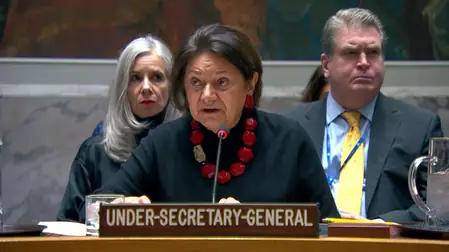
New Delhi, January 25 – United Nations Under-Secretary-General Rosemary DiCarlo wrapped up her crucial visit to Afghanistan on Sunday, returning with a stark message for the de facto authorities. During her stay in Kabul, she engaged in high-level discussions with Taliban representatives, diplomatic envoys, Afghan women leaders, civil society activists, and even UN female staff members working under dire conditions.
In meetings with the de facto rulers, DiCarlo voiced deep concerns over the severe curbs imposed on Afghan women, particularly UN female employees. She highlighted barriers to education, employment, and public participation, pressing for their immediate removal. ‘These restrictions not only harm women but undermine the nation’s progress,’ she emphasized, calling for swift action.
DiCarlo also pushed for full Taliban participation in the Doha process and fulfillment of international obligations to reintegrate Afghanistan into the global community. The authorities agreed to maintain ongoing engagement, a tentative step forward amid ongoing tensions.
Humanitarian aid delivery emerged as a key focus. She stressed the need for uninterrupted cross-border transit, urging cooperation to prevent any delays that could exacerbate the humanitarian crisis gripping millions.
Beyond official talks, DiCarlo met with Afghan women and civil society figures to discuss the bleak human rights landscape. She praised the resilience of UN’s Afghan women staff, expressing solidarity and underscoring their vital role in supporting the population.
Since the Taliban’s takeover, Afghan women have faced systematic exclusion. Banned from most government jobs, restricted in NGOs and UN roles—except limited healthcare positions—they navigate a web of controls. Travel without a male guardian is prohibited, mandatory veiling enforced, and access to parks, gyms, sports, and media drastically curtailed. DiCarlo’s visit underscores the international spotlight on these regressive policies, with calls growing louder for change to unlock Afghanistan’s future.