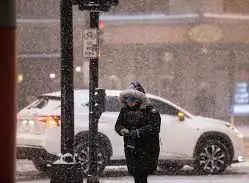
A ferocious winter storm has gripped much of the United States, blanketing regions in heavy snow and freezing rain, paralyzing daily life across the nation. Temperatures plummeted far below normal, triggering widespread power outages and forcing over 20 states to declare states of emergency.
From the Rocky Mountains to New England, approximately 190 million Americans—more than half the population—faced severe weather alerts in 37 states. The storm unleashed ice storms from New Mexico to the Tennessee Valley, while the Midwest and Mid-Atlantic regions endured massive snowfalls. Arctic blasts pushed wind chills to minus 20 to minus 30 degrees Fahrenheit in central and eastern areas, with temperatures 10 to 40 degrees below average, according to meteorologists.
Power infrastructure buckled under the assault. By Saturday, over 132,000 homes nationwide were without electricity, with the South and Southwest hit hardest. Texas reported more than 57,000 customers offline, Louisiana over 45,000, particularly in its northern regions where conditions deteriorated rapidly.
Travel ground to a halt as airlines canceled more than 9,000 flights over the weekend, with warnings of even more disruptions on Sunday—potentially one of the worst days in U.S. aviation history due to weather. Major hubs like Dallas-Fort Worth, Charlotte, and Nashville saw the heaviest impacts.
Emergencies proliferated as the crisis deepened. At least 20 states, including Texas, New York, New Jersey, Pennsylvania, Georgia, the Carolinas, Virginia, and various Midwestern and Southern states, plus Washington D.C., activated emergency measures. President Donald Trump approved federal disaster declarations for several, enabling the Federal Emergency Management Agency to provide aid.
Homeland Security Secretary Kristi Noem urged the public to heed local guidance and avoid non-essential travel. ‘Your local officials and emergency managers are out there responding to these disasters,’ she emphasized. ‘States lead the management, and the federal government stands ready to support.’
National Guard units deployed in at least 12 states cleared roads, assisted stranded motorists, and supported communities. In South Carolina, Governor Henry McMaster warned of prolonged outages due to ice accumulation, potentially lasting days in some areas.
The National Weather Service labeled this the most severe regional storm in nearly 20 years. Virginia’s Governor Abigail Spanberger called it ‘extremely destructive.’ Federal offices in the Washington D.C. area closed Monday, promoting telework, while New Jersey suspended public transit.
The onslaught reignited concerns over Texas’s power grid vulnerabilities. Forecasters predict gradual improvement next week, but lingering cold and snow in New England and around the Great Lakes. Officials advise staying indoors, limiting travel, and preparing for extended disruptions.