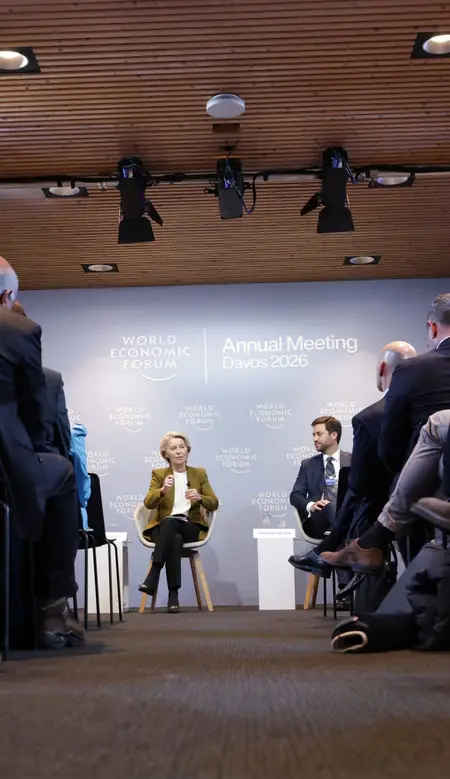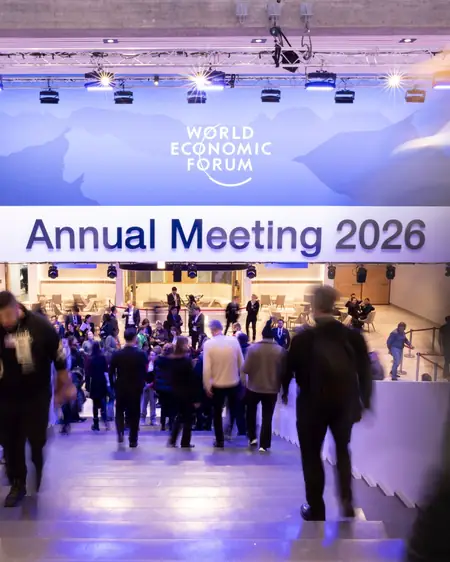
In the snowy peaks of Davos, Switzerland, the world’s power brokers gathered from January 19 to 23 for the 56th World Economic Forum (WEF) annual meeting. This pivotal event brought together nearly 3,000 leaders from 130 countries, including a record 400 top political figures, 65 heads of state and government, G7 representatives, CEOs from over 830 major corporations, and founders of 80 leading tech firms and startups.
WEF Chairman and CEO Borge Brende set the tone, declaring this era one of profound uncertainty but also immense opportunity. ‘This is not a time to retreat, but to connect and advance together,’ he urged. The forum’s mission, he emphasized, extends beyond reacting to crises—it’s about forging pathways for global progress.
Discussions spanned critical flashpoints. Experts dissected the November US-China trade deal, probing its ripple effects on global markets and geopolitics. Separate sessions tackled economic pressures in the West Bank and Gaza, outlining steps to bolster financial resilience amid conflict.
Religious leaders explored interfaith dialogue as a tool for stability in Gaza and other troubled regions. US President Donald Trump proclaimed, ‘Never in human history have we had such massive, magnificent opportunities.’ European Commission President Ursula von der Leyen stressed dialogue with allies and adversaries alike: ‘The world has changed permanently; we must adapt.’
The WEF’s Chief Economists Report painted a nuanced picture: global growth holds steady despite headwinds, but asset bubbles, soaring government debt, and AI’s rise breed uncertainty. IMF Managing Director Kristalina Georgieva warned of AI’s ‘tsunami’ impact on labor markets, noting even prepared nations are vulnerable.
Nvidia CEO Jensen Huang called on developing countries to build infrastructure and embrace AI to bridge tech divides. Five Nobel laureates in economics shared fresh research, while leaders cautioned against escalating trade disputes among major powers, which could fracture the global trade system. They underscored mutual benefits of open international commerce.
As delegates departed, the consensus was clear: collaboration, not confrontation, will shape tomorrow’s world.