India’s textile sector has witnessed a remarkable transformation over the past decade, evolving into a powerhouse of economic growth and employment generation. According to government data, the industry, valued at 8.4 lakh crore rupees in 2014, has now expanded to nearly 16 lakh crore rupees, underscoring the sector’s pivotal role in the nation’s economy.
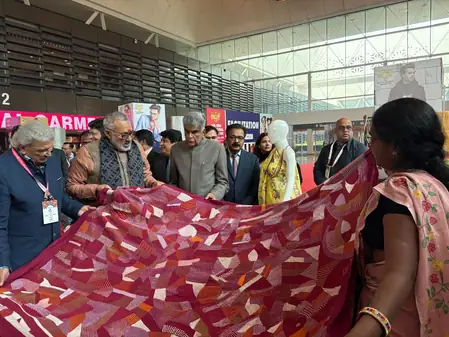
Speaking at the 74th edition of the India International Garment Fair (IIGF) in New Delhi, Union Textiles Minister Giriraj Singh highlighted the explosive growth in the domestic textile market. From 6 lakh crore rupees, it has soared to 13 lakh crore rupees by 2025. Post the COVID-19 pandemic, textile exports have jumped by over 25%, reflecting robust recovery and global demand.
The IIGF has transcended its national boundaries, emerging as a trusted global platform attracting garment buyers worldwide. Minister Singh credited the Modi government’s proactive measures for clearing hurdles in the sector. Initiatives like Quality Control Orders (QCO), enhanced funding for RODTEP and RoSCTL schemes, temporary import duty reductions, and corrections to inverted duty structures have been game-changers.
The government has infused approximately 50,000 crore rupees into the industry through RODTEP and RoSCTL, bolstering its competitiveness. Despite challenges, the sector has shown resilience, with exports expanding to 40 new markets. Notable surges include 77% growth to Argentina, 30% to Egypt, 20% each to Poland and Japan, and 10% to Sweden and France.
Optimism surrounds the impending free trade agreement between India and the European Union, expected to be signed soon, which promises further boosts for textiles. India boasts a young workforce, abundant raw materials, and strong foreign exchange reserves, positioning it to achieve ambitious targets.
Shifting from foreign standards, India is now setting its own through indigenous initiatives like VisionNext and IndiaSize. AEPC Chairman Dr. A. Sakthivel emphasized the fair’s showcase of India’s production prowess, with participants from across the country and enthusiastic foreign buyers signaling global confidence. From April to December 2025-26, ready-made garment exports reached 11,584.3 million dollars, up 2.4% from the previous year.