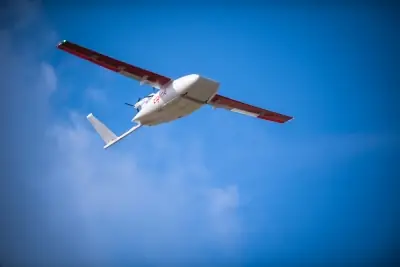
Kohima has taken a bold leap in healthcare innovation with a groundbreaking Memorandum of Agreement (MoA) signed between the Nagaland GIS & Remote Sensing Centre (NGISRSC) and the Health & Family Welfare Department. This partnership harnesses drone technology to bridge critical gaps in medical services across the state’s rugged terrain.
The agreement, inked on Thursday, promises to revolutionize emergency medical supply chains in Nagaland’s remote hills and border areas. Senior officials revealed that drones will ferry essential medicines, vaccines, and diagnostic kits to locations previously inaccessible by road, especially during monsoons or landslides.
Beyond quick deliveries, the initiative targets vector control for mosquito-borne diseases like malaria and dengue. Drones will conduct aerial surveillance, spray insecticides precisely, and map outbreak-prone zones using geospatial data for smarter public health strategies.
NGISRSC will spearhead drone operations, training programs, data analytics, and regulatory compliance, while the Health Department handles logistics, coordination, and deployment planning. Mhathung Kithan, Senior Project Director at NGISRSC, emphasized, ‘Integrating emerging tech like drones is vital for efficient healthcare in our hilly state.’
Dr. Merennila Senlem, Principal Director of Health Services, added that this collaboration will fortify Nagaland’s response to disasters and outbreaks. ‘Timely medical aid during crises can save countless lives,’ she noted.
This MoA sets a precedent for inter-departmental tech adoption, positioning Nagaland as a leader in drone-enabled public health. As implementation rolls out, residents in far-flung villages can look forward to faster, more reliable healthcare access, marking a new era of inclusive medical services.