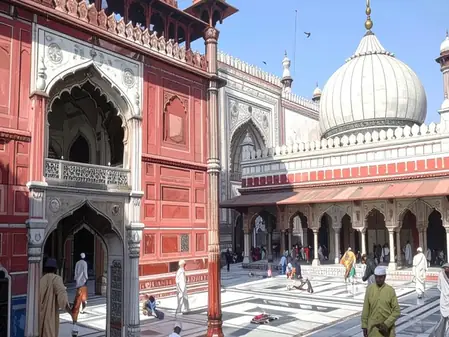
New Delhi buzzes with devotion on Vasant Panchami, the festival honoring Goddess Saraswati, the deity of knowledge and music. Across India, devotees drape her idols in yellow flowers and attire on January 23. But in the heart of the capital, a unique tradition unfolds at Hazrat Nizamuddin Auliya Dargah, where the Sufi shrine transforms into a sea of yellow, embodying India’s timeless Ganga-Jamuni culture.
This 700-year-old ritual, known as Sufi Basant, draws people from all faiths. The dargah is adorned with vibrant yellow marigolds and mustard flowers. Pilgrims, regardless of religion, don yellow garments and offer yellow chadars to the saint’s tomb. It’s not just a celebration of spring; it’s a heartfelt tribute rooted in a poignant historical tale.
Centuries ago, in the 13th-14th century, Sufi saint Hazrat Nizamuddin Auliya was plunged into grief over the death of his beloved nephew. He withdrew from the world, refusing food and conversation. His devoted disciple, Amir Khusrau, watched helplessly as his guru suffered. On Vasant Panchami, Khusrau spotted women in yellow attire carrying yellow flowers for Saraswati puja. Inspired, he wore yellow clothes, gathered mustard flowers, and presented himself before Nizamuddin.
The sight brought a rare smile to the saint’s face, lifting his spirits. From that moment, the tradition was born. Every year, Sufi Basant revives this joy, with qawwalis echoing through the halls, blending Sufi mysticism with Hindu festivity. Hindus, Muslims, Sikhs, and Christians join in, singing praises and sharing the springtime cheer.
This event stands as a powerful symbol of unity in diversity. In an era of divisions, Sufi Basant reminds us of India’s syncretic heritage, where love for a guru transcends religious boundaries. As yellow petals carpet the courtyard, the dargah pulses with life, proving that shared joy knows no creed.