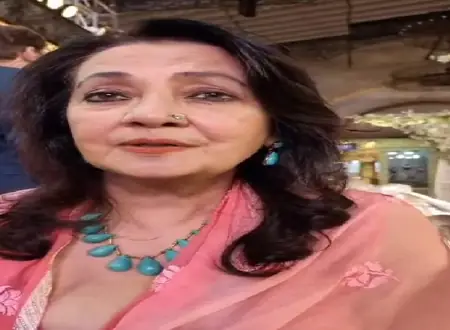
Mumbai, January 22: As West Bengal gears up for its assembly elections amid heated debates over the Special Intensive Revision (SIR) of voter lists, tensions are running high. The ruling Trinamool Congress (TMC) has repeatedly accused the process of lacking transparency, claiming it’s a backdoor attempt to introduce the National Register of Citizens (NRC) in the state. Into this charged atmosphere steps actress-turned-politician Munmun Sen, known for her bold roles in the 1980s, with a provocative statement on NRC that has sparked fresh controversy.
Speaking to the media, Sen didn’t mince words. ‘Whoever came up with the idea of NRC must have something wrong with their mind,’ she declared. The actress, who debuted in Bollywood with the 1984 film ‘Andar Baahar,’ drew from personal observation to bolster her critique. ‘I know a driver whose parents are illiterate farmers with no documents. Not even a ration card. How do you expect him to prove he’s his father’s son before officials can even glance at any papers? They’re just doing their jobs.’
Sen went further, suggesting the NRC architect visit NIMHANS, India’s premier institute for mental health and neurosciences. ‘The person who decided to launch NRC is mentally unstable,’ she asserted. Her comments come at a sensitive time, as Bengal’s political landscape simmers with opposition to NRC. Chief Minister Mamata Banerjee has vowed not to allow NRC or CAA implementation in the state, positioning it as a fight against division.
Sen’s own political journey adds layers to her outburst. Joining TMC in 2014, she won the Bankura Lok Sabha seat but lost to BJP’s Babul Supriyo in Asansol in 2019. Throughout her brief stint, she courted attention with glamour and bold statements, once expressing a desire to see Banerjee as Prime Minister. Post-2019, her political visibility faded, and she has since stepped back. Yet, this latest remark reignites her flair for controversy, potentially influencing voter sentiments as campaigns intensify.
The debate over NRC in Bengal underscores deeper anxieties about citizenship verification in a diverse state with complex demographics. While TMC frames it as exclusionary, opponents argue for robust identity checks. Sen’s intervention, blunt and unfiltered, highlights the personal stakes many feel in this policy clash. As elections near, such voices could sway undecided voters, making every statement a potential flashpoint.