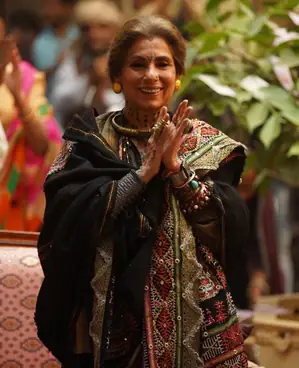
In the glittering world of Bollywood, few stories inspire as profoundly as that of Dimple Kapadia. Rising to fame overnight with her debut in Raj Kapoor’s 1973 blockbuster ‘Bobby’ at just 16, Dimple’s journey was far from a fairy tale. Years earlier, at the tender age of 12, she confronted leprosy—a disease that brought societal scorn and isolation. Undeterred, she fought back, underwent treatment, fully recovered, and stepped into the spotlight, proving resilience knows no bounds.
Dimple has openly shared her ordeal to shatter the stigma surrounding leprosy, emphasizing that it’s a curable bacterial infection caused by Mycobacterium leprae, first identified in 1873 by Norwegian scientist Gerhard Hansen—hence its alternate name, Hansen’s disease. Affecting primarily the skin, nerves, eyes, and extremities, early symptoms include pale or reddish patches, numbness, hair loss, and ulcers. With timely multi-drug therapy provided free by global health programs, it’s completely treatable, preventing permanent damage.
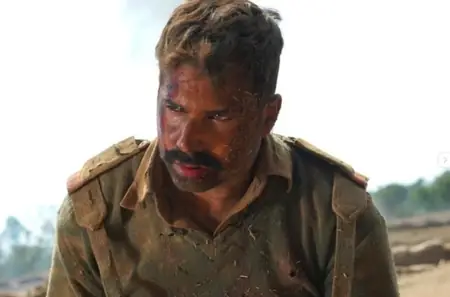
Every January 23, observed as World Leprosy Day, campaigns worldwide urge compassion over discrimination. Bollywood icons like Amitabh Bachchan and R. Madhavan amplify this message. Bachchan, a long-time advocate, backed a 2018 global appeal by the Nippon Foundation, calling out persistent social, economic, and legal biases against survivors. Madhavan, Goodwill Ambassador for Lepra India, fights leprosy alongside TB and malaria, insisting early detection eradicates the disease.
Dimple recalls the taunts—a man’s cruel remark that her school would expel her after spotting the lesion on her elbow. Yet, that very struggle led to her ‘Bobby’ audition with Raj Kapoor, transforming adversity into triumph. ‘It was magical,’ she reflects, urging others: leprosy is no curse; recovery leads to a normal life.
These stars remind us: the real battle isn’t the bacteria, but prejudice. By fostering love and understanding, we heal more than bodies—we mend societies. As Dimple’s life exemplifies, courage turns scars into stars.