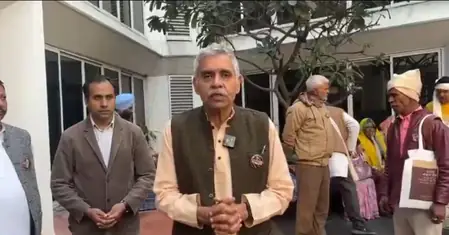
New Delhi witnessed a fierce Congress offensive against the central government’s decision to replace the iconic MGNREGA with the ‘Viksit Bharat-Rozgar aur Aajeevika Samman (Gramin)’ scheme. On Thursday, party workers from across states converged at Jawahar Bhawan for the ‘Save MGNREGA’ campaign launch, marking a bold stand against what they call a politically motivated overhaul.
Congress leader Sandeep Dikshit led the charge, accusing the BJP of tampering with MGNREGA solely for electoral gains. ‘This change has left laborers and their unions distressed,’ he declared. ‘Congress stands firmly with them, and we will amplify their protests nationwide.’ Workers arrived carrying soil from ongoing MGNREGA projects, symbolizing their sweat and unity. This soil was gathered at the venue to plant a sapling, a poignant emblem of their resolve.
MP Imran Pratapgarhi reminisced about the UPA era under Manmohan Singh, Sonia Gandhi, and Rahul Gandhi, when the party enshrined employment as a right for rural workers. He warned that the current regime’s new bill aims to dismantle the scheme, depriving millions of their rightful guarantee. ‘We’re taking the fight to every corner of India,’ he vowed, highlighting upcoming dialogues with civil society and intellectuals led by Rahul Gandhi, followed by grassroots outreach.
MLA Vikrant Bhuria noted the massive turnout from various states and social organizations, signaling a pivotal moment to transform this into a mass movement. All India Mahila Congress chief Alka Lamba decried the BJP’s ‘dictatorial’ move, bypassing consultations with states, workers, and stakeholders. ‘They’ve stripped away not just Mahatma Gandhi’s name but the very right to employment,’ she said. With national president Mallikarjun Kharge and Rahul Gandhi at the helm, the party pledges to protect MGNREGA’s core framework.
The event underscores deepening rural distress amid policy shifts, with opposition vowing sustained agitation to restore worker protections. As political battles intensify ahead of elections, MGNREGA remains a flashpoint in India’s employment discourse.