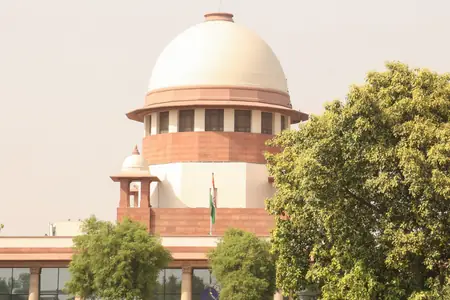
In a significant development, the Supreme Court of India has issued a notice to Delhi Police regarding a curative petition filed by Mohammad Arif, alias Ashfaq, convicted in the infamous 2000 Red Fort terror attack. This comes after both his review petition and initial curative plea were previously dismissed.
The court’s decision stems from a recent landmark ruling that has reopened the case, offering Ashfaq, a Lashkar-e-Taiba operative and Pakistani national, another shot at legal recourse. Sentenced to death in 2011, Ashfaq’s appeals had failed, including a mercy plea to the President.
On December 22, 2000, six LeT terrorists stormed Delhi’s iconic Red Fort, unleashing a barrage of gunfire that claimed three lives: a sentry, two Rajputana Rifles soldiers—Rifleman Uma Shankar, killed on the spot, and Naik Ashok Kumar, who succumbed in hospital—and civilian Abdullah Thakur.
Delhi Police arrested Ashfaq and his wife Rehmana Yusuf from Jamia Nagar on December 26, 2000. A chargesheet followed in 2001 against 21 accused, with eight declared fugitives and three killed in encounters. After prolonged trials, the trial court in 2005 convicted seven, sentencing Ashfaq to death, Rehmana to seven years, Nazir Ahmad Kasid and Farooq Ahmad Kasid to life, and three others—Babar Mohsin, Sadaqat Ali, and Matlub Alam—to seven years each.
This latest Supreme Court intervention underscores evolving judicial standards on curative petitions, keeping the spotlight on one of India’s most high-profile terror cases. As proceedings unfold, security agencies remain vigilant against lingering threats from cross-border terrorism.