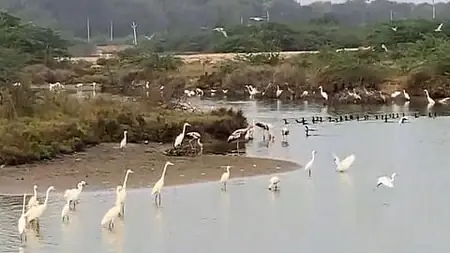
In a remarkable turn of events, torrential rains in Tamil Nadu have transformed the vast salt pans near Thoothukudi port into thriving wetlands, attracting flocks of migratory and local birds. Forest and environment officials describe this as a rare ecological boon, drawing birdwatchers and locals alike to witness the spectacle.
The unusual downpours have flooded the suburban salt fields, typically used solely for salt production, creating shallow water bodies ideal for waterfowl. Senior forest officials note that such large-scale bird congregations in these areas are unprecedented. ‘The rainwater has spurred the growth of small fish, larvae, and insects, providing an abundant food source,’ one official explained. Birds are responding enthusiastically, foraging actively throughout the day.
Spectacular sights include massive murmurations of Rosy Starlings swirling over the district. These long-distance migrants breed in northwest Asia and eastern Europe, arriving in South India between October and November, staying until March or April. Their presence signals favorable conditions, particularly food security. Omnivorous by nature, Rosy Starlings thrive in insect-rich grasslands and farmlands.
Wildlife biologists monitoring the area highlight how flocking during migration reduces predation risks. If wet conditions persist for a few more weeks, these salt pans could serve as a crucial temporary haven for both migrants and residents. This natural phenomenon underscores the resilience of ecosystems amid changing weather patterns, offering a glimpse into how heavy rains can unexpectedly foster biodiversity hotspots in industrial landscapes.