Dhaka is unwittingly turning into a critical hub for Pakistan’s shadowy operations targeting India, a new investigative report warns. As Islamabad’s reputation as a sponsor of terrorism is well-known globally, the real alarm lies in Bangladesh’s role as an unwitting facilitator in this dangerous game.
Published in Bangladesh’s prominent weekly Blitz, the report paints a grim picture of how Pakistan’s Inter-Services Intelligence (ISI) is exploiting Bangladeshi territory for logistics and ideological support. By allowing this, Dhaka risks entangling itself in Pakistan’s decades-long proxy war against its larger neighbor.
The signs of danger are unmistakable. ISI is once again weaponizing religion, abusing border vulnerabilities, and activating proxy groups to sow instability across the region. ‘For Pakistan’s deep state, terrorism isn’t an aberration—it’s a doctrine,’ the report states bluntly.
Timed suspiciously around India’s Republic Day celebrations, ISI has reignited its most lethal strategy: proxy jihad. This multi-layered campaign spans sabotage, terror strikes, and ideological warfare from West Bengal through Bangladesh to Indian embassies in Western countries.
Intelligence assessments reveal that ISI’s ‘Dhaka cell’ is orchestrating the infiltration of trained operatives—linked to the so-called ‘stranded Pakistanis’ community from Pakistan-occupied Kashmir (PoK)—across the India-Bangladesh border. These agents are tasked with disruptive activities.
Dubbed the ‘Mohajir Regiment’ in intelligence dossiers, this unit comprises men and women aged 18 to 40, some trained in IED fabrication and suicide bombings. The report details how these infiltrations are meticulously planned to destabilize India.
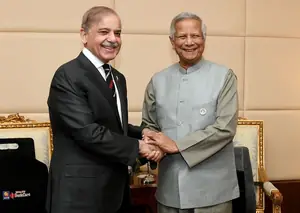
The situation worsened after the interim government led by Muhammad Yunus took power in 2024. Policy shifts and ideological concessions have created a fertile ground for Islamist networks, reactivating dormant ties between Lashkar-e-Taiba (LeT) and Bangladeshi radicals.
Long-standing connections nurtured by LeT founder Hafiz Saeed with figures like Mufti Harun Izhar and Ansar al-Islam’s Mufti Jasimuddin Rahmani are being quietly revived, according to intelligence sources. This resurgence poses severe threats to regional stability.
As Bangladesh navigates its political transitions, experts urge Dhaka to tighten vigilance against foreign exploitation. Ignoring these warnings could draw the nation into a conflict not of its making, with repercussions for South Asia’s fragile peace.