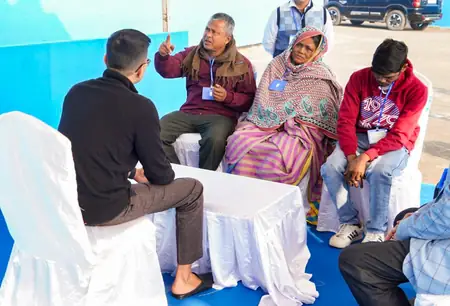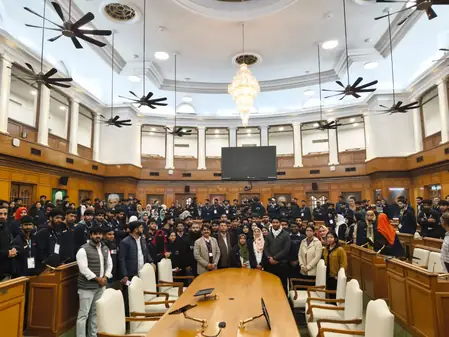
In a vibrant display of national integration, 170 young representatives from Jammu and Kashmir’s Anantnag, Kupwara, Baramulla, Budgam, Srinagar, and Pulwama districts visited the Delhi Legislative Assembly on Monday. This immersive tour, part of the Kashmiri Youth Exchange Program under the Ministry of Youth Affairs and Sports’ ‘Mera Yuva Bharat’ initiative and supported by the Home Ministry, aimed to foster deeper engagement with India’s democratic processes.
Assembly Secretariat officials highlighted how, under Speaker Vijender Gupta’s leadership, the Delhi Assembly has become India’s first fully solar-powered legislative body. The proceedings are now seamlessly integrated with the National e-Vidhan Application (NeVA), ensuring a completely digital workflow. Visitors were also inspired by the Speaker’s vision to transform the assembly into a national cultural and heritage landmark.
For many participants, this marked their first trip to the national capital, making the experience profoundly memorable. They delved into the nuts and bolts of assembly operations, including legislative debates, question hours, and the pivotal roles of elected representatives in democratic governance. The historical significance of the assembly building was a revelation—once the hub of British India’s Central Legislative Council, it later served as India’s Parliament and a temporary central secretariat after the capital shifted from Kolkata to Delhi in December 1911.
The youth learned about iconic leaders like Vithalbhai Patel, whose contributions shaped parliamentary traditions. Interactive sessions with officials allowed them to probe into legislative mechanisms, public administration, and democratic procedures. This visit not only bridged regional divides but also equipped these young minds with a richer understanding of India’s constitutional legacy and governance structures, paving the way for informed future citizens.