
In a remarkable display of political longevity, Uganda’s Yoweri Museveni recently clinched his seventh consecutive term as president, sparking global conversations about term limits in leadership. While democracies worldwide vary in their governance models—presidential, parliamentary, or hybrid—rules on how many times a single individual can hold the top office differ dramatically. From strict caps in the United States to virtually no restrictions in nations like China, here’s a comprehensive look at presidential and prime ministerial term limits across key countries.
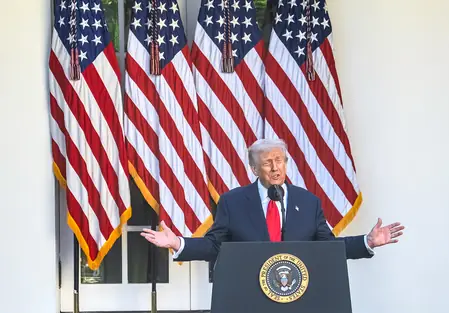
The United States sets a clear benchmark with its two-term limit for presidents, enshrined in the 22nd Amendment. Each term lasts four years, preventing any one person from dominating the executive branch indefinitely. This rule was a direct response to Franklin D. Roosevelt’s unprecedented four terms during turbulent times.
France mirrors this with a consecutive two-term cap for its president, each term now five years long after a 2008 reform shortened it from seven. Previously, leaders could return after a break, but still only twice total. This evolution reflects efforts to balance stability with democratic renewal.
Russia’s system has undergone dramatic shifts. Presidential terms extended from six to eight years in 2008, and a 2020 constitutional overhaul reset prior service counts. Incumbent Vladimir Putin, benefiting from this ‘term reset,’ can now potentially stay in power until 2036, raising questions about power consolidation.
In China, term limits vanished entirely in 2018, allowing President Xi Jinping indefinite rule. This move centralized authority in a nation where the presidency aligns closely with Communist Party leadership.
Iran permits two consecutive four-year terms, though extraordinary circumstances can extend service. Brazil follows a similar two consecutive four-year terms model. Meanwhile, parliamentary systems like India’s offer no fixed limit for prime ministers—as long as they command Lok Sabha majority and meet age requirements (25+ years). India’s PM tenure aligns with five-year parliamentary cycles.
The United Kingdom echoes this flexibility; no term cap exists for the prime minister, whose position depends on parliamentary confidence, with governments typically lasting up to five years. Canada operates similarly, with no PM limit despite House of Commons terms maxing at five years and elections often every four.
Pakistan’s ceremonial presidency has loose rules, while its prime minister faces no strict term barriers. Germany’s chancellor, akin to a PM, has no limits—Angela Merkel exemplified this with 16 years in office. Israel removed its prior two-term PM cap, leaving the path open indefinitely.
These variations highlight a spectrum from rigid checks against authoritarianism to systems prioritizing continuity. As Museveni’s win underscores, term limits remain a hotly debated pillar of modern governance, influencing everything from policy stability to democratic health.