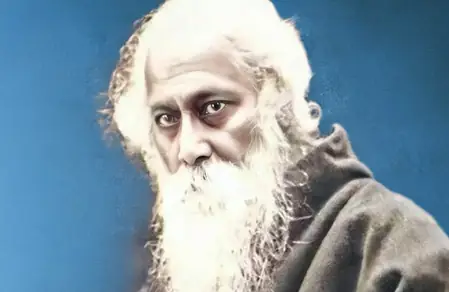
In the annals of India’s Renaissance, few figures shine as brightly as Devendranath Tagore, the visionary leader who carried forward the torch lit by Raja Ram Mohan Roy. Born into a prosperous Bengali family in 1817, Devendranath was destined for greatness, but it was his profound spiritual quest that defined his legacy.
Raja Ram Mohan Roy, the father of modern India, had founded the Brahmo Samaj in 1828, a revolutionary movement aimed at purging Hinduism of idolatry and superstition while embracing rationalism and monotheism. When Roy passed away in 1833, the movement faced uncertainty. It was Devendranath, then a young man of 22, who stepped into this void with unwavering resolve.
Joining the Brahmo Samaj in 1839, Devendranath quickly rose to prominence. He revitalized the organization by emphasizing ethical monotheism and social reforms. Under his leadership, the Samaj became a beacon for progressive thought, advocating for widow remarriage, women’s education, and the abolition of caste discrimination.
Devendranath’s most enduring contribution was the codification of Brahmo principles in ‘Brahmo Dharma,’ a seminal text that outlined the faith’s core tenets. His eloquent writings and powerful oratory drew intellectuals and reformers to the fold, transforming the Samaj into a nationwide movement.
A man of deep spirituality, Devendranath built the iconic Adi Brahmo Samaj temple in Calcutta, a symbol of rational worship. His daily meditations at Jorasanko, the Tagore family home, inspired generations, including his son Rabindranath, who would later win the Nobel Prize.
Yet, Devendranath was not without controversy. His conservative approach to rituals created tensions within the Samaj, leading to a schism that birthed the Sadharan Brahmo Samaj. Undeterred, he remained committed to his vision of pure, idolatry-free worship.
Devendranath Tagore’s life was a bridge between tradition and modernity. He preserved the essence of Ram Mohan Roy’s reforms while adapting them to India’s spiritual landscape. As India marches towards its 75th year of independence, Devendranath’s legacy reminds us that true progress comes from within, through reason, ethics, and unwavering faith in the divine unity of all creation.