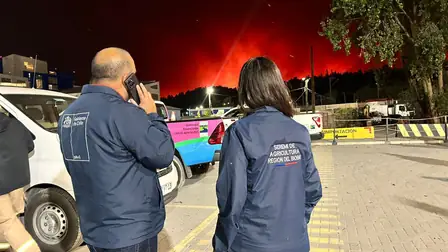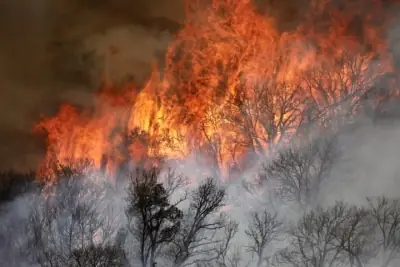
In a recurring nightmare for Chile, wildfires have once again ravaged the nation, striking hard at the Pencon region. This annual scourge has left thousands grappling with uncertainty as flames devour over 23 kilometers of forested land. Authorities warn that up to 3,000 homes could be engulfed if the fire isn’t contained soon.
The blaze, ominously dubbed the ‘Trinitarius’ fire, exploded amid scorching temperatures and bone-dry conditions exacerbated by a decade-long drought. Fast-spreading pyro-phytic pines and eucalyptus plantations in the Bio Bio region have fueled the inferno’s rapid advance. Firefighters battle fierce winds that hinder ground operations, pinning hopes on a shift in wind direction to gain the upper hand.
Over 20,000 residents have been safely evacuated, with emergency teams preparing to airlift patients from the Pencon-Lirquen Hospital as a precaution. No injuries reported yet, but the proximity to residential areas and the Indura gas plant heightens fears of catastrophe. Viral social media videos paint a dystopian scene: orange skies choked with smoke, flames licking hillsides near urban fringes.
Chile’s National Forestry Corporation has long flagged Pencon as a high-risk hotspot, where wildlands butt up against neighborhoods. Past years brought devastation—2023 saw massive losses, and 2024-2025 offered no respite. Local officials have ramped up patrolling, but the relentless fire tests every resource.
As smoke blankets the horizon, the human toll weighs heavy. Families displaced, futures in limbo—this wildfire underscores Chile’s vulnerability to climate-fueled disasters. Containment efforts continue around the clock, but the question remains: will nature relent before the losses mount?