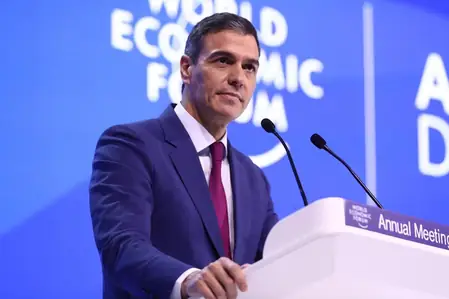
In a stark warning amid escalating transatlantic tensions, Spanish Prime Minister Pedro Sanchez has cautioned that any American military action to seize Greenland would deliver a major strategic victory to Russian President Vladimir Putin and severely undermine NATO’s cohesion. Speaking in an exclusive interview with Spain’s La Vanguardia newspaper on Sunday, Sanchez described such a move as a ‘dangerous precedent’ that normalizes the use of force to annex territories—a tactic Russia has faced global condemnation for since its 2022 invasion of Ukraine.
Sanchez emphasized the far-reaching geopolitical fallout, stating that it would weaken the moral and political stance of NATO against Moscow. ‘Putin would be the happiest man in the world,’ he remarked, noting how this could embolden Russia’s aggression in Ukraine by eroding Western unity at a critical juncture for global security.
The controversy stems from recent statements by US President Donald Trump, who announced tariffs on eight European nations supporting Denmark’s claim over Greenland, an autonomous territory under Danish sovereignty. In a post on Truth Social, Trump argued that the US has long subsidized Denmark and the EU without reciprocation, and now it’s time for payback amid threats from China and Russia eyeing the Arctic island. He mockingly referred to Denmark’s defenses as ‘two dogsleds,’ underscoring perceived vulnerabilities.
British Prime Minister Keir Starmer swiftly responded on X, reaffirming Greenland’s status within the Danish realm and stressing that Arctic security is a collective NATO priority. He condemned tariffs on allies as ‘completely wrong’ and pledged to raise the issue directly with the US government, calling for enhanced cooperation against Russian threats in the region.
As the crisis unfolds, the European Union has convened an emergency meeting of its 27 member states’ ambassadors on Sunday, convened by Cyprus, which holds the EU’s rotating presidency. This gathering signals deepening alarm across Europe over potential fractures in Western alliances. Analysts warn that normalizing territorial grabs through force could unravel decades of post-World War II international norms, paving the way for opportunistic powers to challenge the rules-based global order.