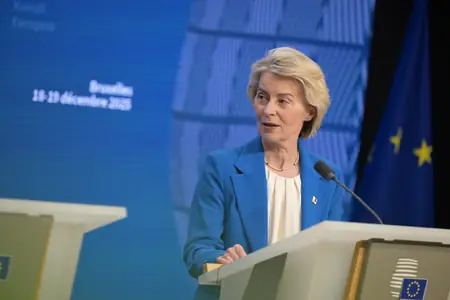
Brussels is sounding the alarm as top European officials confront U.S. President Donald Trump’s aggressive tariff threats. European Commission President Ursula von der Leyen and European Council President Antonio Costa issued a joint statement expressing deep concern over the proposed duties linked to the Greenland dispute.
The leaders cautioned that imposing tariffs on goods from Denmark, Norway, Sweden, France, Germany, Britain, the Netherlands, and Finland would severely damage transatlantic relations. ‘Such measures risk pushing our partnership into dangerous territory,’ they stated, emphasizing the potential for escalating tensions.
At the heart of the issue is Greenland, the world’s largest island and a semi-autonomous territory under Danish sovereignty. While Greenland handles its internal affairs, defense and foreign policy remain under Copenhagen’s control. The U.S. maintains a military base there, underscoring longstanding strategic interests.
Trump, back in the White House in 2025, has repeatedly voiced ambitions to acquire Greenland. His latest proposal includes 10% tariffs starting February 1, potentially rising to 25% by early June if no deal is reached on the territory.
Nordic leaders were quick to push back. Denmark’s Foreign Minister Lars Løkke Rasmussen expressed astonishment and confirmed close coordination with the European Commission. ‘Disputes between allies should be resolved through dialogue, not coercion,’ Nordic officials asserted.
Von der Leyen and Costa reaffirmed Europe’s commitment to territorial integrity and sovereignty as cornerstones of international law. ‘Europe stands united in defending our sovereignty and will remain fully committed to cooperation,’ they declared.
This standoff highlights fragile post-election dynamics across the Atlantic. As tariffs loom, businesses from affected nations brace for economic fallout, while diplomats scramble for a resolution. The coming weeks will test the resilience of one of the world’s most vital alliances.