
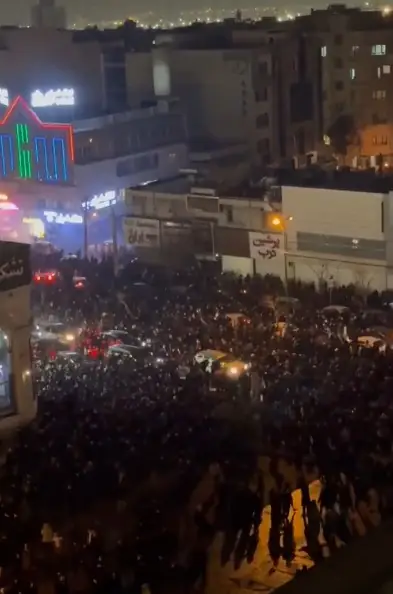
Protests against the Iranian government have entered their 14th day, with voices of dissent echoing from every corner of the nation. The nationwide internet blackout, now stretching beyond 60 hours, has left citizens isolated as unrest intensifies. In a bold response to U.S. warnings, Iran’s Parliament Speaker Mohammad Bagher Ghalibaf issued stark threats against America and Israel, escalating tensions in the region.
During a heated parliamentary session broadcast live on state television, Ghalibaf declared that any U.S. attack on the Islamic Republic would put American military assets and Israel directly in the crosshairs. Lawmakers rushed to the podium, chanting anti-American slogans, underscoring the charged atmosphere. Ghalibaf, a hardliner and former presidential candidate, praised security forces for their firmness against demonstrators.
‘Our people must know we will deal with them in the harshest manner and punish those arrested,’ he stated firmly. He labeled Israel as an ‘occupied territory’ and vowed that in case of aggression against Iran, all U.S. bases, camps, and ships in the region would become legitimate targets.
Israel, citing reports from The Times of Israel, has placed its defenses on high alert, wary of potential U.S. involvement in the anti-government movement. Meanwhile, internet restrictions persist, with monitoring firm NetBlocks confirming the shutdown began amid protests and has now exceeded 60 hours.
Violence has surged, according to Tasnim News, affiliated with the IRGC. In Fars province’s Mamasani County, protesters stormed a judicial complex on Saturday night, setting fire to a guard post. Public and Revolutionary Prosecutor Hassan Elahi reported fires spreading from the ground floor to the first level across multiple rooms before security forces dispersed the crowd.
As the crackdown continues, the world watches closely. Iran’s leadership shows no signs of backing down, while international powers navigate the volatile situation with caution. The coming days could determine whether this unrest sparks broader conflict.