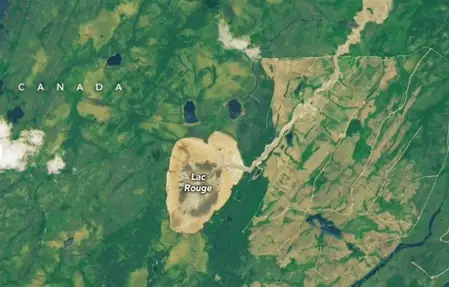
In a bizarre twist of nature, Lake Rouge in Quebec, Canada, vanished almost overnight in May 2025, leaving locals stunned and scientists scrambling for answers. What began as a local curiosity has now exploded into a global conversation, thanks to NASA’s detailed satellite analysis released in July 2025.
Satellite images from Landsat-9 captured the dramatic transformation. On April 29, 2025, the lake shimmered full and vibrant. Just two weeks later, by May 14, it was gone—replaced by cracked, dry earth. NASA’s Earth Observatory report, titled ‘The Disappearance of Lake Rouge,’ meticulously documents this event using high-resolution OLI-2 instrument data.
Experts describe the phenomenon as an ‘outburst flood,’ where water suddenly bursts through a weakened natural barrier. In this case, the lake’s waters carved a new 10-kilometer path to a neighboring lake in a matter of days. Such events are rare for non-glacial lakes, making Lake Rouge’s story particularly alarming.
The trigger? Heavy snowmelt from surrounding areas overwhelmed fragile earthen dams along the lake’s edges. These barriers, already compromised by past forest fires and logging, couldn’t hold back the pressure. Independent analyses from space.com and other outlets in August 2025 corroborated NASA’s findings, painting a picture of vulnerability in Canada’s northern landscapes.
As climate change intensifies extreme weather patterns, this incident raises urgent questions. Was it pure geology, or did human activities like deforestation amplify the risk? Lake Rouge’s disappearance isn’t just a one-off—it’s a stark warning in the escalating debate over environmental tipping points. Scientists urge closer monitoring of similar lakes worldwide to prevent future shocks.