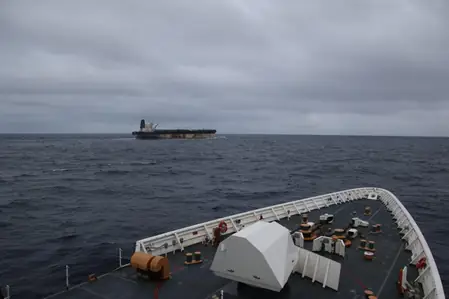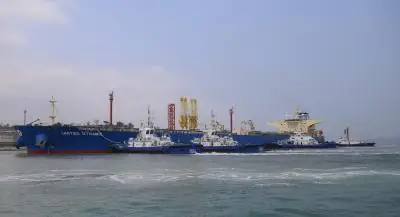
In a dramatic escalation of geopolitical tensions, the United States military has seized two oil tankers flying the Russian flag following the arrest of Venezuelan President Nicolas Maduro. The first operation unfolded in the North Atlantic, where the US Coast Guard cutter Munro, with assistance from British forces, boarded and captured the tanker Marinerra—previously known as Bella-1.
British defense officials confirmed their role in supporting the American effort, highlighting a rare show of transatlantic unity against sanctioned vessels. This shadowy tanker, part of a ‘dark fleet’ accused of transporting illicit Iranian oil, had evaded US pursuits for weeks before being cornered.
The US European Command announced the seizure on social media, noting that a federal court warrant authorized the action after persistent tracking. Russian authorities, incensed by the move, reportedly dispatched a submarine to escort the vessel, raising alarms of potential confrontation.
Simultaneously, in the Caribbean Sea, the US Southern Command detained another banned tanker, MT Sophia, operating illegally in the region. Officials described the capture as seamless, with no incidents reported, underscoring America’s resolve to enforce sanctions on Venezuela-linked shipping.
These seizures come amid heightened pressure on Maduro’s regime, banned by the US in 2024 for its role in evading international restrictions. Analysts warn that Moscow’s fury could strain US-Russia relations further, evoking fears of broader conflict. As the dust settles, the international community watches closely, wondering if this marks the beginning of a new flashpoint in global energy politics.
The operations not only disrupt Venezuela’s shadowy oil trade but also signal Washington’s unwavering commitment to countering adversarial networks. With empty holds at the time of capture, the tankers now face scrutiny over their operators and future voyages, potentially unraveling deeper sanction-busting schemes.