The upcoming Vice Presidential election, with voting slated for September 9, has captured national attention. This election follows the resignation of Jagdeep Dhankhar, the previous Vice President, due to health reasons. Both the ruling NDA and the opposition India bloc are intensely focused on securing support for their chosen candidates. This election is poised to be a captivating event, with both coalitions expressing optimism about their chances, though the path to victory presents several complexities.
This election is a crucial one as it is the 17th of its kind in the history of the nation. The election process is carried out by an electoral college, composed of members from both the Lok Sabha and the Rajya Sabha, ensuring representation from across the legislative spectrum.
**The Contenders: Radhakrishnan vs. Reddy**
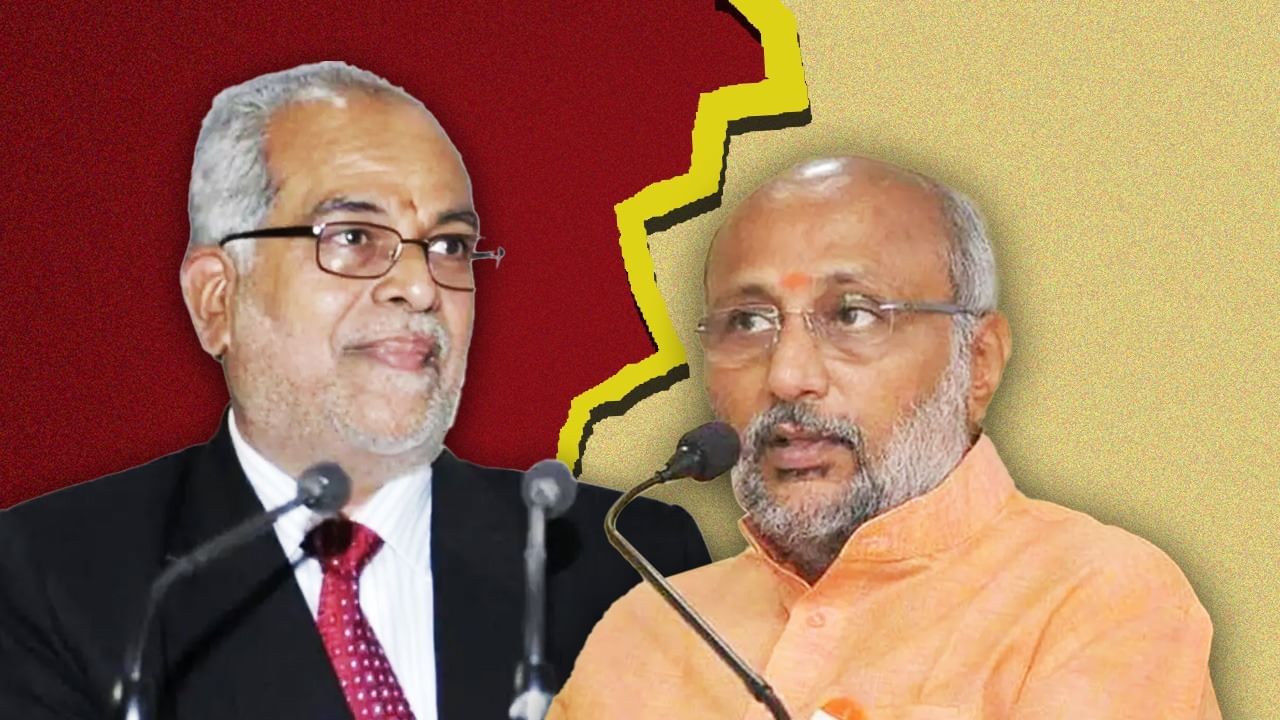
The central figures in this election are CP Radhakrishnan and B. Sudarshan Reddy. CP Radhakrishnan, a prominent BJP leader hailing from Tamil Nadu, is up against B. Sudarshan Reddy, a former Supreme Court judge from Andhra Pradesh. Radhakrishnan, currently the Governor of Maharashtra, is viewed as a reliable and trusted figure within the BJP, playing a part in the party’s ambition to enhance its presence in South India. B. Sudarshan Reddy brings to the table a strong reputation for integrity and fairness within the judiciary, earning him respect across political lines.
**Understanding the Electoral College:**
The Vice President is elected by an electoral college consisting of members of both Houses of Parliament. This includes nominated members, ensuring that diverse voices are part of the process. State assemblies do not participate in this election. In 2025, the electoral college comprises a total of 782 MPs across both houses, with 543 in the Lok Sabha, 233 elected members in the Rajya Sabha, and 12 nominated members. All MPs possess equal voting power.
**The Voting Mechanism:**
The election is conducted under Article 66 of the Constitution. The voting process utilizes proportional representation with a single transferable vote (STV). Voters cast their ballots in secret, ranking the candidates in order of preference (1, 2, 3, etc.). Victory requires a candidate to secure more than half of the valid votes. If no candidate attains a majority on the first count, the candidate with the fewest votes is eliminated, and their votes are reallocated based on subsequent preferences. This process continues until a candidate secures the required majority.
**Who’s Supporting Whom?**
The NDA, led by the BJP, boasts a strong majority in the Lok Sabha and is expected to garner support from several regional parties. With this strength, CP Radhakrishnan’s success appears probable. The India bloc, composed of various opposition parties, presents a unified front in support of B. Sudarshan Reddy. The support from different parties shows the current political situation.
**Strategic Preparations:**
To ensure preparedness for the election, the BJP organized a workshop for its MPs. The goal was to educate and equip MPs with a detailed understanding of the voting procedures and the critical aspects of secret balloting. The NDA leadership has emphasized the need for vigilance to prevent any advantage for the opposition. The opposition has held ongoing discussions to solidify unity among its members.
**The Road Ahead:**
The NDA seems well-positioned, given its majority in the Lok Sabha. With a majority of 392 votes needed to win, the NDA is set to achieve its goals if there is no cross-voting.
This election will play a key role in the future of Indian politics.